
Access Clearfield Unclaimed Money
Clearfield residents may have unclaimed money sitting with the Utah State Treasurer right now. The state holds funds from dormant bank accounts, uncashed paychecks, forgotten utility deposits, insurance proceeds, and many other financial assets. Searching for Clearfield unclaimed money is free and open to everyone. Clearfield is located near Hill Air Force Base, and the steady rotation of military families through the area means accounts get left behind at a higher rate than in most cities. Current and former Clearfield residents should check the state database to see if anything is waiting for them.
Clearfield Quick Facts
How to Search Clearfield Unclaimed Money
The Utah State Treasurer operates the official unclaimed property database for all Utah cities, including Clearfield. The portal is mycash.utah.gov. No account is required, and there is no cost to search. Go to the site, enter a name, and review the results. You can look up your own name, a business name, or the name of a deceased family member. The portal returns any unclaimed money records held by the state that match your search.
Results show the property type, an approximate value range, and the name of the company that originally reported the funds. Utah's unclaimed property program collects assets from banks, credit unions, insurance companies, employers, utility providers, and brokerage firms. When a holder cannot locate the account owner after the dormancy period ends, state law requires them to transfer the funds to the Treasurer. Once the state holds the property, it stays in the searchable database with no expiration date. You can claim it at any time.
The image below shows the state portal Clearfield residents use to search for unclaimed money.
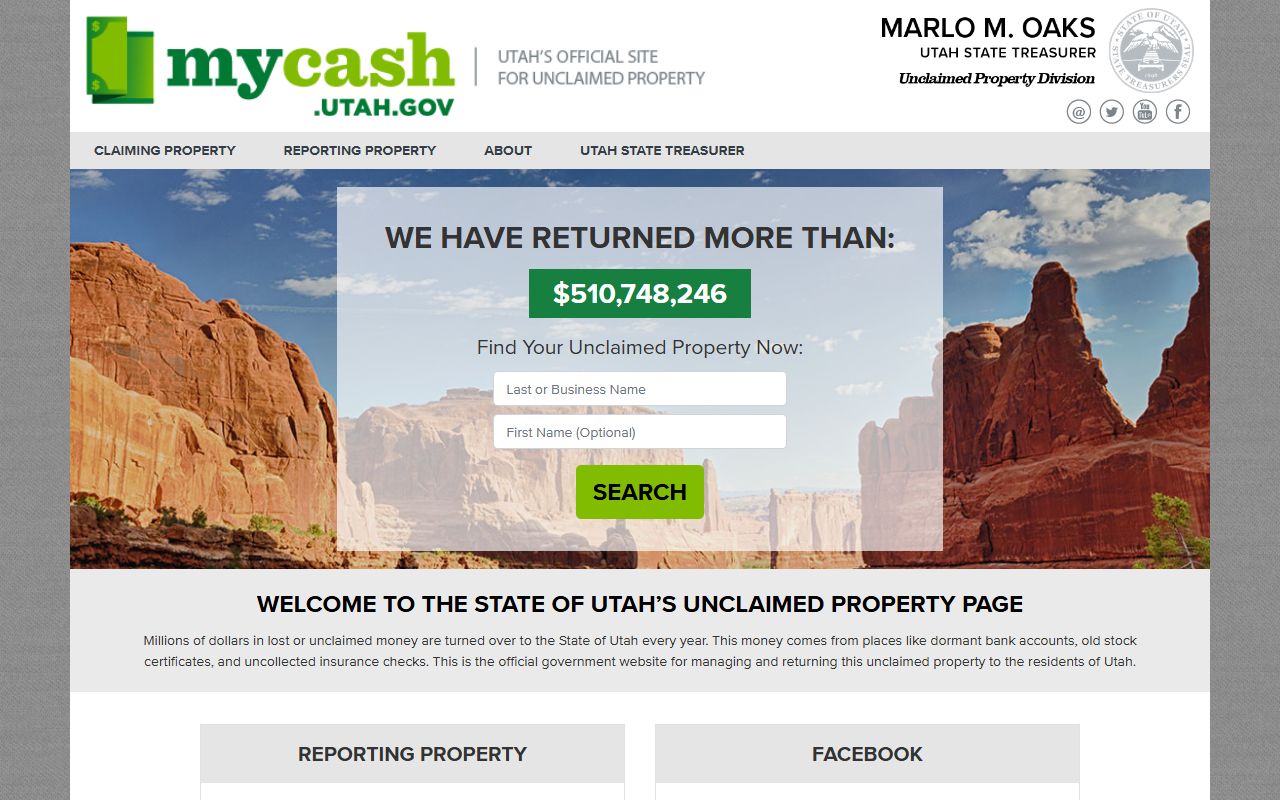
Search results may return multiple records for one name. Review all of them, since each could represent a different account or property type.
Clearfield is a Davis County city with close ties to Hill Air Force Base and the defense industry employers that operate nearby. Military personnel rotate through the area on regular PCS orders. When service members or their families move, accounts at local banks or credit unions sometimes get left behind. Final paychecks from civilian defense contractors go uncashed. Utility deposits from a rental property never get returned because the provider lost the forwarding address. All of these scenarios generate unclaimed property, and Clearfield sees them regularly because of the base nearby.
Clearfield City Hall is at 55 S State Street, Clearfield, UT 84015. The official city site is at clearfieldcity.org. The city does not run a separate unclaimed property program. City staff do not search the state database on your behalf, but they can help point you toward state-level resources if you need guidance.
The image below shows information from UPPO, the Unclaimed Property Professionals Organization, which provides guidance on how businesses and holders report unclaimed property to states like Utah each year.
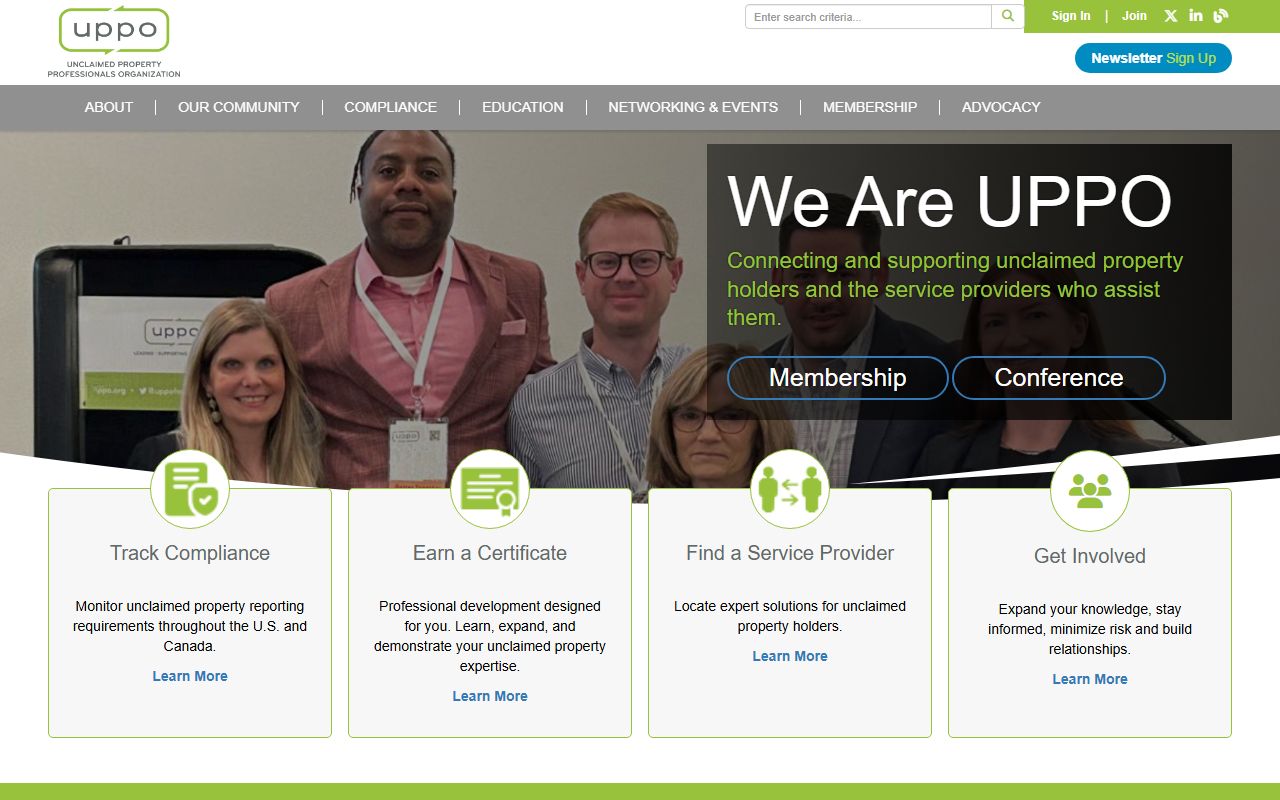
UPPO at uppo.org offers resources for businesses navigating Utah's annual November 1 unclaimed property reporting deadline, which is how funds like those belonging to Clearfield residents end up with the state.
Types of Unclaimed Property in Clearfield
The types of unclaimed property tied to Clearfield reflect the city's position near Hill AFB and its mix of military, civilian, and defense contractor residents. Uncashed final paychecks from base contractors are common. Bank accounts at local Utah credit unions get abandoned when military families receive orders and move quickly without closing everything out. Insurance policies go unclaimed when a service member or civilian worker dies and the beneficiaries don't know the policy exists. All of this flows to the Utah State Treasurer in time.
Other common property types for Clearfield residents include checking and savings account balances, utility and rental security deposits, stock dividends and brokerage account funds, court-ordered refunds, premium refunds from insurance policies, and contents of safe deposit boxes that banks turn over to the state. Dormancy periods vary. Wages and utility deposits go dormant after one year. Most bank accounts take three years. Money orders have a seven-year dormancy period. Traveler's checks take fifteen years. Once dormancy ends, holders report and transfer property to the state by November 1 each year.
Utah Code Title 67, Chapter 4a sets the legal rules for all of this. The full text is at law.justia.com. The statute explains who must report, when, and what happens to the property once the state receives it.
Clearfield Local Resources and Davis County
Clearfield is part of Davis County. For unclaimed property purposes, the key contact is the Utah State Treasurer, not the county. County services sit between the city and state for many programs, but unclaimed property is handled entirely at the state level. Your Davis County address history may still be relevant when the state verifies your identity during a claim, so having old bills or bank statements with a Clearfield address on hand can be useful.
For county-level details and office locations near Clearfield, visit the Davis County unclaimed money page. Davis County is home to a mix of defense, healthcare, and technology employers. The volume of unclaimed property flowing from those employers and the financial institutions that serve their workers is significant. The county page also covers other nearby cities and their unclaimed property resources.
For direct assistance with a claim, reach the Utah State Treasurer's Unclaimed Property Division at (801) 715-3300. The mailing address is P.O. Box 140530, Salt Lake City, UT 84114-0530. Staff handle questions about required documents, how to file for an estate, and what to expect during review. Most Clearfield residents can complete the entire process online without visiting a state office.
Utah's program has returned over $131 million since it launched in 1957. About 1 in 5 Utahns has an unclaimed record. The search is free and takes just a few minutes. For a city like Clearfield, where people frequently move in and out because of the base, the chance of finding an old account is higher than average. It is worth checking.
MissingMoney.com for National Coverage
Clearfield residents who have lived in other states, especially military families who have been stationed at bases across the country, should also check MissingMoney.com. This free, NAUPA-endorsed search tool pulls data from more than 39 states in a single query. If you served at Fort Bragg, Camp Pendleton, or another base before arriving in Clearfield, accounts left behind at those locations may still be in those states' unclaimed property databases. MissingMoney.com lets you search most of them at once.
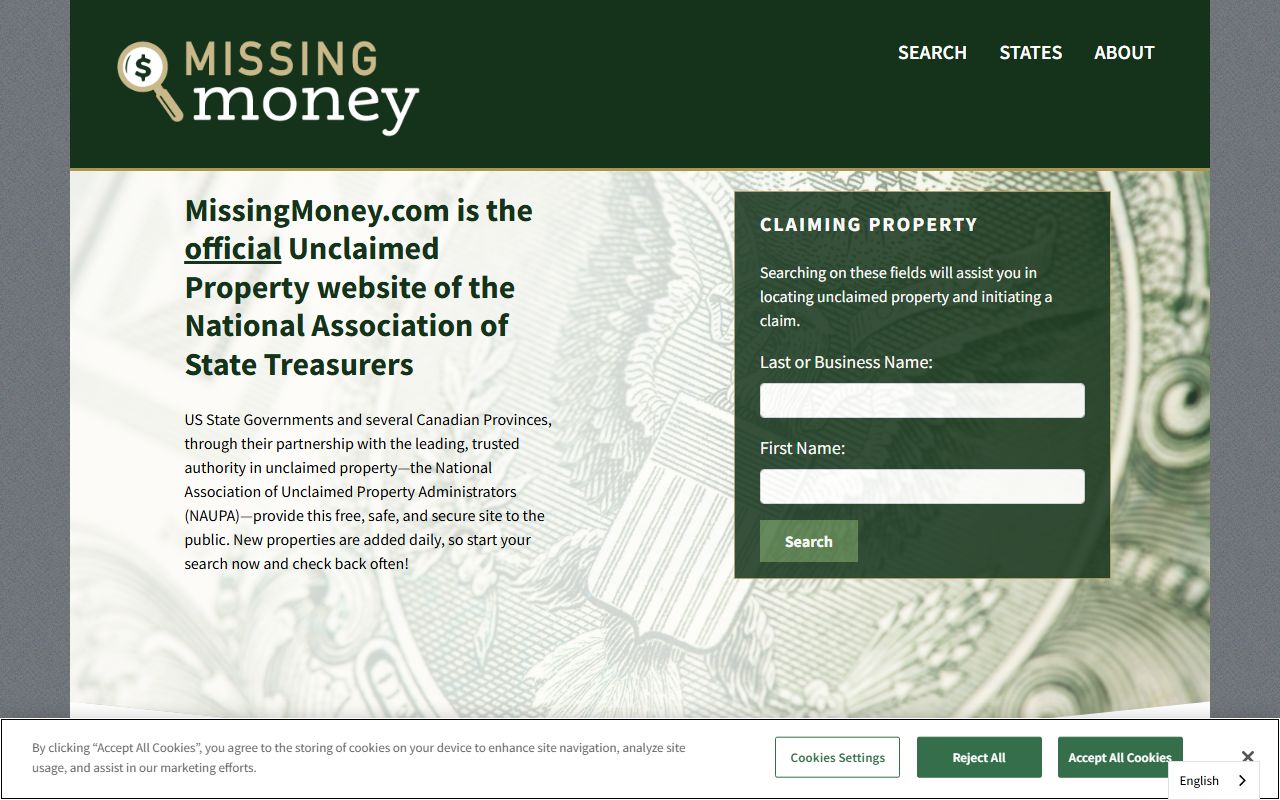
Each result on MissingMoney.com links directly to the official state portal where you can file a claim, so you don't have to hunt for the right site.
NAUPA also keeps a directory of all state unclaimed property programs at unclaimed.org. States not yet included in MissingMoney.com are listed there with direct links. Running a Utah search and a national search together takes less than fifteen minutes and costs nothing. The combination gives you the most complete view of what might be waiting under your name across the country.
Ignore paid search services that charge a fee or take a percentage of what you recover. You don't need them. Every database they search is publicly available at no cost. The tools described here are official, free, and give you direct access to your own records. Do the search yourself and keep everything that is yours.
Filing Your Clearfield Unclaimed Property Claim
When you find a matching record at mycash.utah.gov, you file the claim directly on the same site. Most people can handle the process entirely online. The state needs to verify your identity and confirm your connection to the property. For most claims, this means a government-issued photo ID, your Social Security number, and your current address. The state checks this against what the original holder submitted when they transferred the property.
Complex claims need more documentation. Claiming an old bank account might require an account number or a statement. Claiming money for a deceased family member means providing a death certificate and proof of your legal standing as heir or estate representative. This could include a will, a probate court order, or an affidavit of heirship, depending on the circumstances. The state reviews each claim separately. Simple claims typically close within a few weeks. Estate matters take longer, but the Unclaimed Property Division staff can help you understand what is needed.
There is no rush. Utah Code 67-4a-501 establishes that the right to claim unclaimed property does not expire. A military family that left Clearfield three years ago has the same right to claim as a current resident. So do the heirs of someone who lived here decades ago. The state holds the money as custodian and cannot keep it permanently. It waits until a rightful owner comes forward with proper documentation.
Once the claim is approved, the state pays by check or direct deposit. You choose during the filing process. A notice goes out when the claim is approved, and the funds follow. Most Clearfield residents do not need to visit a state office. The portal handles everything from search to payment.
Utah Unclaimed Property Law Overview
Utah's unclaimed property program is governed by Title 67, Chapter 4a of the Utah Code. This statute requires every holder of unclaimed property to report and transfer those assets to the state after the applicable dormancy period. The annual reporting deadline is November 1. Holders include banks, credit unions, insurance companies, employers, utility providers, and brokerage firms. Once the property is transferred, the Treasurer makes it searchable and claimable through the public portal.
A key feature of Utah law is the absence of a reversion date. In some states, unclaimed property eventually escheats permanently to the government after a set number of years. Utah does not work that way. The state serves as custodian, holding the money on behalf of the original owner. That owner, or their legal heirs, can claim the property at any point in the future. For a city like Clearfield, where the population cycles frequently due to the military base, this means both current and former residents retain their rights to claim regardless of how long ago they lived here.
The law also addresses safe deposit box contents. Banks transfer unclaimed box contents to the state after the dormancy period. The state catalogs and stores these items along with financial accounts. Claiming physical property follows the same process as claiming cash. The full statute is available at law.justia.com for anyone who wants to review the complete legal framework before starting a claim.
Nearby Cities
Clearfield is surrounded by other Davis County cities where residents can search for unclaimed money through the same free state portal. Friends and family in Layton, Kaysville, Syracuse, or Bountiful can all run a search at mycash.utah.gov at no cost. Visit the city pages below for local unclaimed property information near Clearfield.