
Eagle Mountain Unclaimed Money Search
Eagle Mountain residents may have unclaimed money held by the Utah State Treasurer from prior addresses, old bank accounts, or past employers. The state collects dormant funds from banks, utilities, insurance companies, employers, and many other sources that are required by law to report them after a set inactivity period. Searching for unclaimed money in Eagle Mountain costs nothing and takes just a few minutes at mycash.utah.gov. As one of the fastest-growing cities in all of Utah, Eagle Mountain has a large population of newer residents who moved here from other cities and states, and those moves often leave old accounts behind.
Eagle Mountain Quick Facts
How to Search Eagle Mountain Unclaimed Money
The Utah State Treasurer manages unclaimed property for every city and county in Utah, including Eagle Mountain. The official portal is mycash.utah.gov. No account is required. There is no search fee. Go to the site, type in a name, and review the results. You can search your own name, a business name, a spouse's name, or the name of a deceased family member. Each result shows the property type, approximate value, and the company that reported it to the state.
Eagle Mountain's rapid growth means that many residents are relatively new to the city and have address histories in other parts of Utah or other states entirely. When someone moves, bank statements stop arriving at the old address, utility deposits sometimes go uncollected, and final paychecks can be returned as undeliverable. All of those scenarios produce unclaimed property. First-time homeowners who recently left apartment living are another common case -- security deposits and utility refunds from prior rentals sometimes make it into the state's unclaimed fund instead of back to the person who paid them.
The image below shows the Utah State Treasurer's portal that Eagle Mountain residents use to search for unclaimed funds. The mycash.utah.gov site is updated regularly as new property is reported by holders statewide.
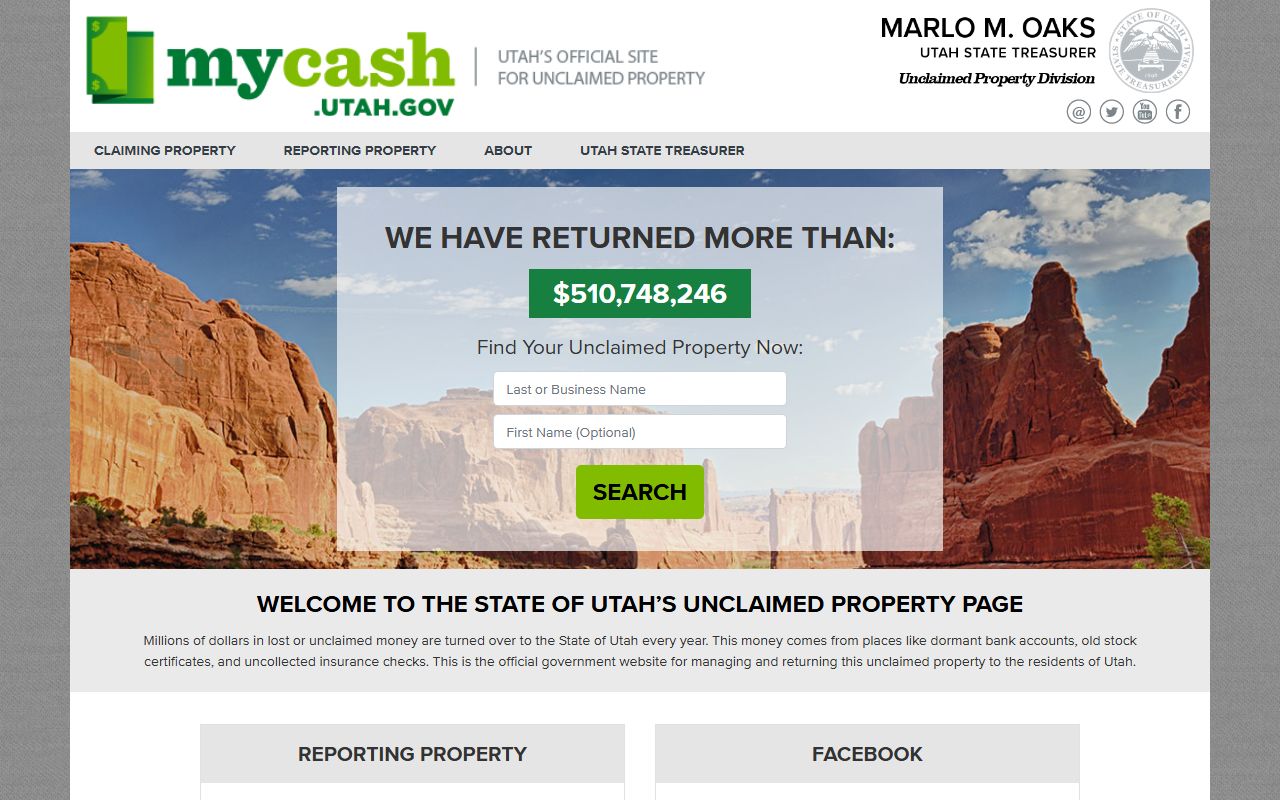
Try searching both your current name and any previous names. If you have changed your last name after marriage, run a search under your maiden name as well -- accounts opened before a name change stay in the system under the old name.
New property is added to the database throughout the year as companies complete their annual reporting. If your search comes up empty today, set a reminder to check again in a few months. People are surprised to find new matches appear after they checked once and found nothing. The system reflects ongoing reporting, not a static snapshot.
Types of Unclaimed Property in Eagle Mountain
Utah law requires a wide range of organizations to report unclaimed property. The category goes far beyond bank accounts. Insurance companies, employers, utilities, courts, brokerages, and government agencies are all required to report funds that have gone dormant. Eagle Mountain's young, growing, and highly mobile population means several property types are especially common here.
Eagle Mountain residents often find these types of unclaimed property at mycash.utah.gov:
- Checking and savings account balances from banks in prior cities or states
- Security deposits from former rental properties and apartments
- Utility deposits from gas, electric, and water companies at old addresses
- Uncashed payroll or final paycheck from past employers
- Insurance policy proceeds, dividend checks, and refunds
- Stock dividends and brokerage account balances tied to prior jobs
- Tax refunds that were mailed to a former address and returned
Dormancy periods set the timeline. Wages and utility deposits go dormant after one year without activity. Most bank accounts take three years. Money orders go dormant at seven years. Traveler's checks sit until fifteen years have passed without contact. Once the period ends, the holder must report and transfer the property to the Utah State Treasurer by November 1. The state then holds it and makes it available through the free public search tool at mycash.utah.gov.
Eagle Mountain Local Resources and Utah County
Eagle Mountain City Hall is at 1651 E Stagecoach Run, Eagle Mountain, UT 84005. The city's official website is eaglemountaincity.com. City staff do not run a separate unclaimed property program and cannot search the state database on your behalf. The official search and claim process runs through the Utah State Treasurer at mycash.utah.gov. City Hall can help connect you to local services or answer general questions about where to start if you are unsure.
Eagle Mountain is in Utah County, the second most populous county in the state. For county-level context and resources, see the Utah County unclaimed money page. That page covers county office information and broader context for residents across Utah County. Utah County's fast growth, driven in large part by cities like Eagle Mountain, means a substantial and growing volume of unclaimed property flows through the county each year.
For help with a specific claim, call the Utah State Treasurer's Unclaimed Property Division at (801) 715-3300. The mailing address is P.O. Box 140530, Salt Lake City, UT 84114-0530. Staff can explain what documents you need for your claim type and walk you through the process. Eagle Mountain residents can file and resolve most claims entirely online without visiting Salt Lake City.
The Eisen Law firm's Utah escheatment guide provides background on how Utah's unclaimed property rules work in practice. The image below links to that resource, which is a helpful overview of the legal framework behind all Eagle Mountain unclaimed money claims.
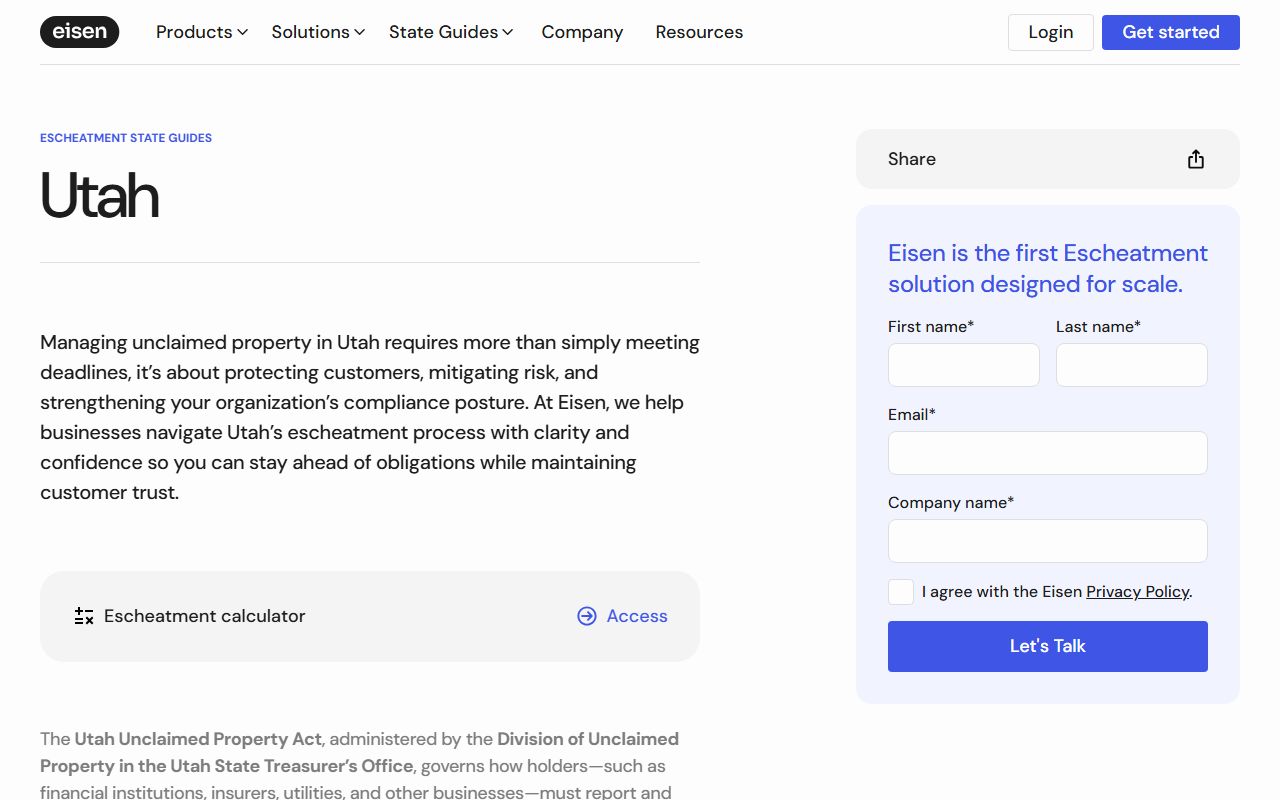
The Eisen Utah guide covers how businesses report unclaimed property in Utah and what the dormancy rules mean for individual property owners.
MissingMoney.com National Search Tool
Many Eagle Mountain residents moved here from other parts of the country, which makes MissingMoney.com especially worth checking. This is the national unclaimed property database endorsed by NAUPA, the National Association of Unclaimed Property Administrators. It combines data from more than 39 states into a single search. If you lived in California, Nevada, Idaho, Arizona, or any other state before moving to Eagle Mountain, this tool lets you check all of those states in one place without visiting each one separately.
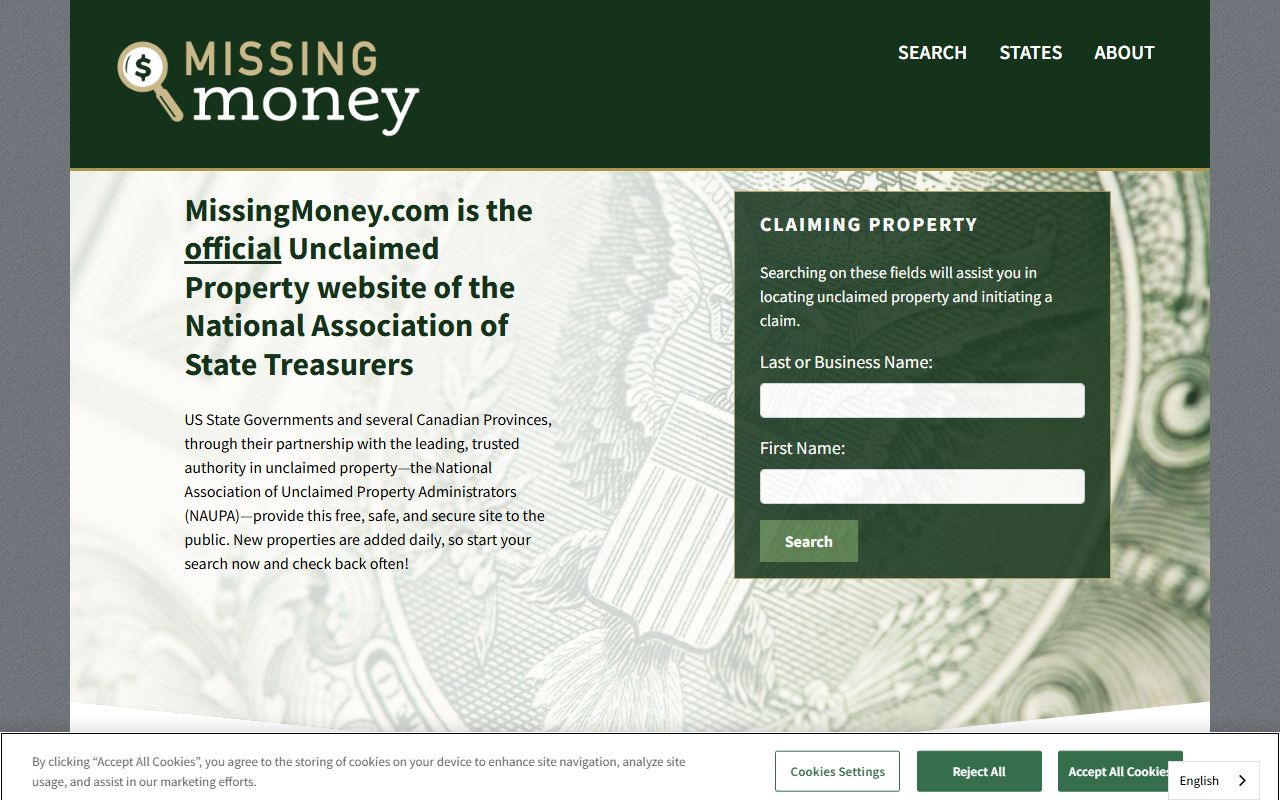
MissingMoney.com links each result to the official state agency holding the property, so you file each claim directly with that state's program at no cost.
NAUPA also keeps a directory of all state programs at unclaimed.org. This covers states that may not yet appear on MissingMoney.com. Between the Utah portal, MissingMoney.com, and the NAUPA directory, you have access to a thorough cross-state search. Never pay a private company to search these databases for you. All of these tools are free and operated by official government agencies or their endorsed national partners.
How to Claim Eagle Mountain Unclaimed Money
When you find a match at mycash.utah.gov, you file the claim on the same site. The state will ask you to verify your identity and show your connection to the property. For most standard claims, a government-issued photo ID and your Social Security number are sufficient. The state checks that information against the records it received from the original holder. When everything matches, the claim is approved and the funds come back to you.
Some claims need more supporting documents. If you are claiming a bank account, an old account number or a prior statement can help confirm ownership. If you are claiming on behalf of someone who has died, you will need a death certificate and documentation of your legal relationship, such as a will, letters testamentary from a probate court, or a small estate affidavit. Heir claims are common and the state handles them regularly, though they take more time to process than straightforward individual claims.
There is no deadline. Utah Code 67-4a-501 states that the right to claim does not expire. Eagle Mountain residents can file for property that was reported to the state last year or property that has been held for many years. The state holds it permanently until the rightful owner comes forward. The right to claim also passes to heirs after the original owner dies, so unclaimed property can be recovered through an estate.
Payment is issued by check or direct deposit based on your choice at filing. Most simple claims are resolved in a few weeks. More complex cases with multiple heirs or disputed ownership can take longer. The entire process is handled online or by mail for most Eagle Mountain residents, with no need to visit the state treasurer's office in person.
Utah Unclaimed Property Law
Utah's unclaimed property program is governed by Title 67, Chapter 4a of the Utah Code. The full text is at law.justia.com. The law sets dormancy periods for each property type, establishes the November 1 annual reporting deadline for holders, and lays out the rules for how the state stores and returns unclaimed property. Holders must make a reasonable effort to contact the owner before transferring property to the state. If they cannot make contact after the dormancy period ends, the transfer must happen.
The most significant protection in Utah law for Eagle Mountain residents is the permanent right to claim. Some people think unclaimed money eventually becomes state property after enough years pass. That is not true in Utah. The state is a custodian, not a beneficiary. You can claim your money this year or twenty years from now. The right does not expire. This is especially important for fast-growing cities like Eagle Mountain, where people are constantly moving in from other areas and may not realize they had accounts go dormant somewhere else years ago.
Safe deposit box contents are also covered by the statute. Banks must transfer unclaimed box contents to the state after the dormancy period runs out. The state logs those items and makes them available for claim. If you had a relative with a safe deposit box at a bank that has since been acquired or closed, it is worth checking whether any contents were transferred to state custody as part of that transition.
Nearby Cities
Eagle Mountain sits in a fast-growing part of Utah County surrounded by several other qualifying cities. Residents and former residents of nearby cities can use the same state portal to search for unclaimed money. Visit the pages below for local details on unclaimed property resources close to Eagle Mountain.