
Find Unclaimed Money in Spanish Fork
Spanish Fork residents may be owed unclaimed money that the Utah State Treasurer is holding right now. Old bank accounts, utility deposits, uncashed checks, insurance proceeds, and other financial assets flow into the state's database when companies can't find their rightful owners. Searching for Spanish Fork unclaimed money is free and takes just minutes. The city has grown quickly in recent decades, with many former residents and new arrivals who may have accounts left behind elsewhere. Anyone who has lived, worked, or held accounts in Spanish Fork is worth a quick search.
Spanish Fork Quick Facts
How to Search Spanish Fork Unclaimed Money
The Utah State Treasurer runs the official unclaimed property program for every city in Utah, including Spanish Fork. The search portal is mycash.utah.gov. No account is needed. No fee applies. Go to the site and type in a name. You can search for yourself, a business, or a deceased family member. The portal returns any unclaimed property records that match the name you entered.
Results include the property type, the approximate dollar range, and the name of the company that originally reported the funds. Utah's program collects property from banks, credit unions, insurance companies, utility providers, employers, and brokerage firms, among others. When a company cannot find an account owner after the dormancy period ends, Utah law requires them to transfer the funds to the state Treasurer. After that, the money sits in a public database indefinitely. There is no deadline to claim it. Utah does not let unclaimed property expire.
The image below shows the search portal Spanish Fork residents use to find unclaimed money.
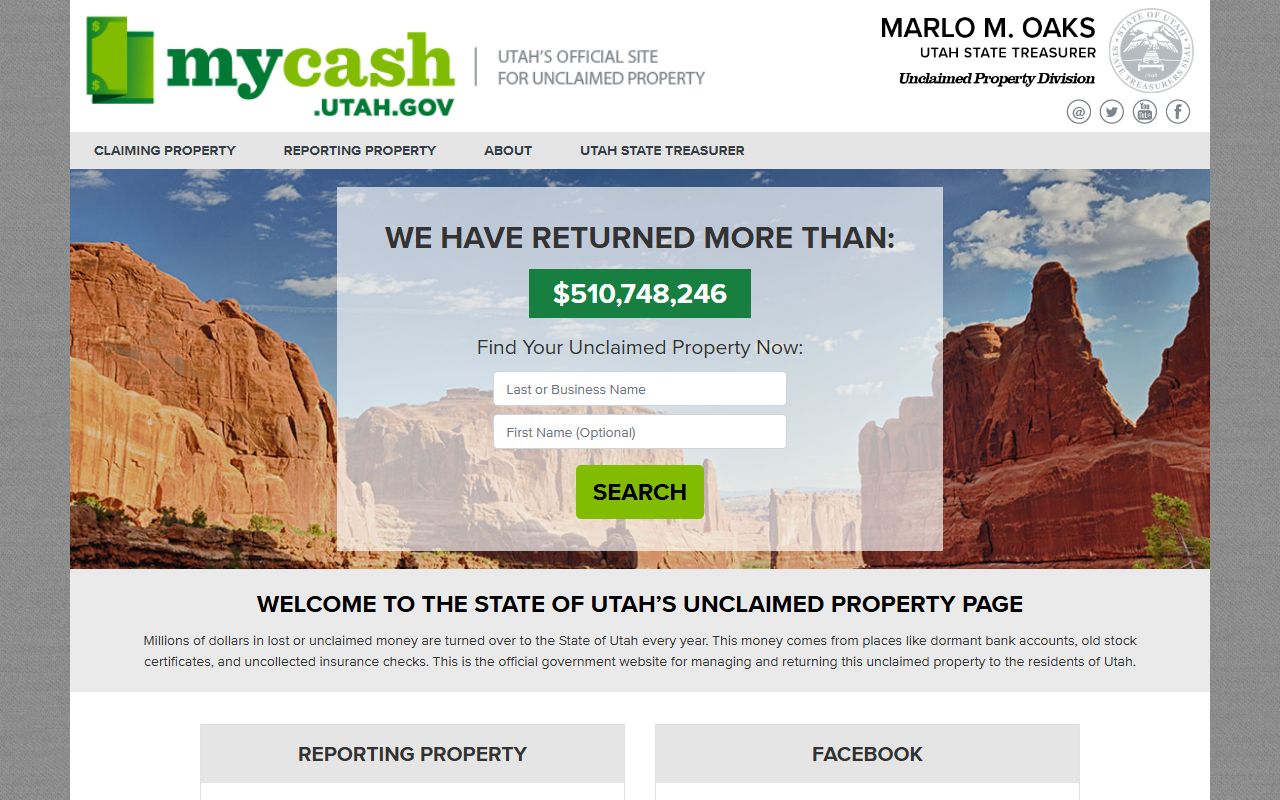
The search may return multiple records for the same name. Review each one carefully. They could represent different property types or different time periods.
Spanish Fork sits south of Provo along I-15 and has grown from a largely agricultural community into a mixed suburban and rural city. Longtime farming families sometimes have old accounts or estate proceeds that were never claimed. More recent arrivals from the Provo metro who moved south for more affordable housing may have left accounts in Provo-area banks. Former residents who moved out of the area entirely are also worth considering. The state holds property for all of them, waiting for a claim.
Spanish Fork City Hall is at 40 S Main Street, Spanish Fork, UT 84660. The official city website is at spanishfork.org. The city does not operate a separate unclaimed property program, but city staff can point residents toward state resources if they need a starting place.
City Hall can help connect Spanish Fork residents with local services even though the unclaimed money search runs through the Utah State Treasurer's portal.
Types of Unclaimed Property in Spanish Fork
Unclaimed property in Spanish Fork reflects the city's history and current character. Agricultural workers sometimes have old cooperative accounts or crop insurance refunds that never got paid out. Residents who moved away left utility deposits that providers couldn't return. Employers issue final paychecks that go uncashed when someone changes jobs and moves. Insurance companies hold life insurance proceeds when they lose contact with a beneficiary after a policyholder's death. All of it ends up with the state eventually.
Common property types include checking and savings balances, uncashed payroll and commission checks, utility and rental security deposits, insurance proceeds and premium refunds, stock dividends and brokerage funds, court-issued refunds, and safe deposit box contents. Dormancy periods differ by type. Wages and utility deposits go dormant after one year. Most bank accounts take three years. Money orders have a seven-year dormancy. Traveler's checks take fifteen years before the state takes custody. Holders report all of these to the state by November 1 each year once the dormancy period has passed.
Utah Code Title 67, Chapter 4a is the statute that governs the full process. You can read it at law.justia.com. The law explains who must report, what must be reported, and how the state manages what it receives.
Spanish Fork Local Resources and Utah County
Spanish Fork is part of Utah County, the second most populous county in the state. For unclaimed property purposes, the main contact is the Utah State Treasurer, not the county. That said, your Utah County address history may be relevant when the state verifies your identity during the claim process. Having old utility bills or bank statements that show a Spanish Fork or Utah County address can help confirm your connection to a property record.
For county-level details and nearby office locations, visit the Utah County unclaimed money page. The county page covers resources and services that serve Spanish Fork and the surrounding area. Utah County has a large and growing population, and significant unclaimed property comes from employers and financial institutions headquartered here.
If you need help with a specific claim, the Utah State Treasurer's Unclaimed Property Division is reachable at (801) 715-3300. You can also mail inquiries to P.O. Box 140530, Salt Lake City, UT 84114-0530. Staff can answer questions about required documentation, estate claims, and how long the review process takes. Most Spanish Fork residents can handle the full process online without visiting any office.
Utah has returned over $131 million in unclaimed property since the program began in 1957. In fiscal year 2022 alone, the state returned $30.6 million to residents. The state held $77.2 million in total unclaimed property as of 2022. Searching is free and takes just a few minutes. The potential to recover money that legally belongs to you makes it worth doing.
MissingMoney.com for National Coverage
Spanish Fork residents who have lived in other states should also check MissingMoney.com. This free, NAUPA-endorsed tool searches records from more than 39 states in a single search. If you moved to Spanish Fork from California, Nevada, or any other state, accounts left behind there are still in that state's unclaimed property database. MissingMoney.com searches many of them at once without requiring you to visit each state's portal individually.
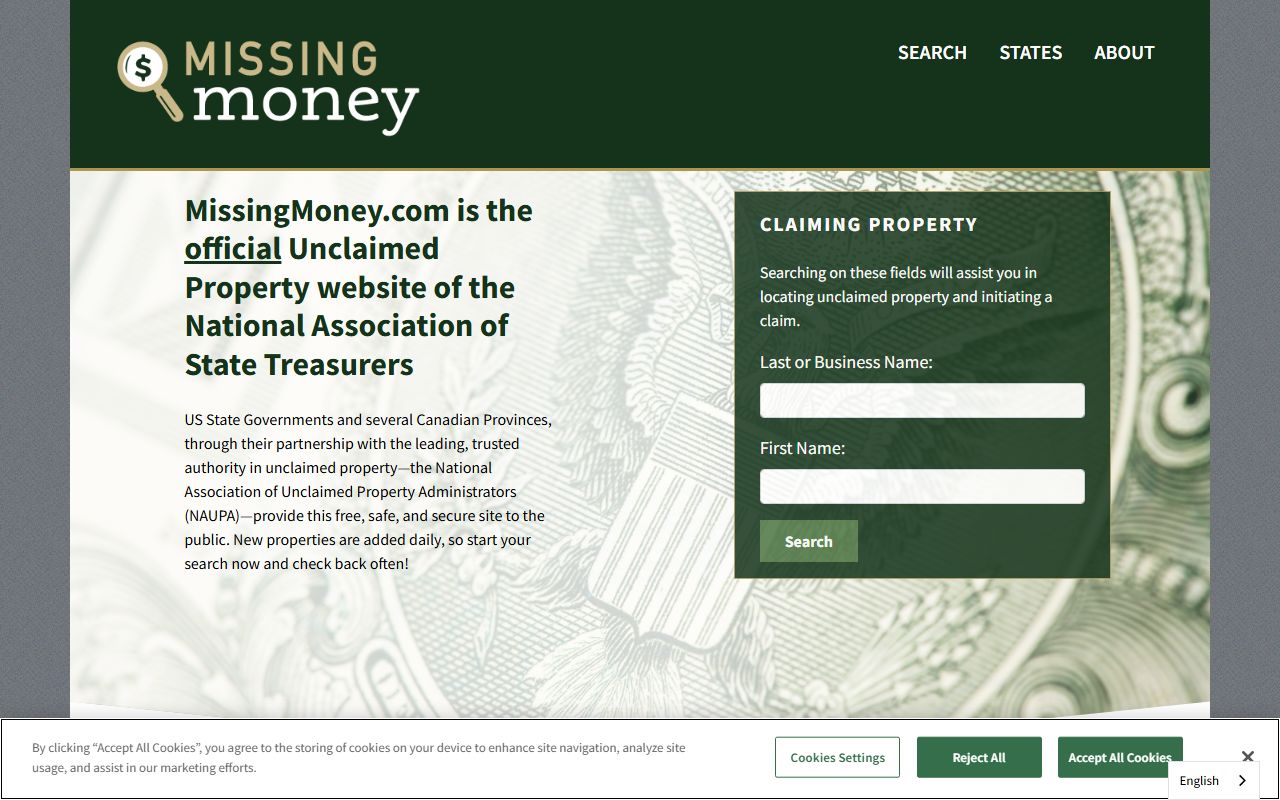
Each result on MissingMoney.com links directly to the official state portal where you can file the claim, making follow-up straightforward.
NAUPA keeps a directory of every state's unclaimed property program at unclaimed.org. If a state you lived in is not yet part of MissingMoney.com, this directory gives you the direct link to that state's official portal. Running a Utah search at mycash.utah.gov and a national search at MissingMoney.com together takes about ten minutes and costs nothing.
Some paid services advertise help finding unclaimed money for a fee or a percentage of what you recover. You don't need them. Every database they use is publicly available. The tools described here are free and run by government agencies or their official partners. Keep what belongs to you, and don't pay someone else to retrieve it for you.
Filing Your Spanish Fork Unclaimed Property Claim
Once you find a matching record at mycash.utah.gov, you file the claim on the same site. No separate office visit is needed for most claims. The state asks you to verify your identity and prove your connection to the property. For most people, this means a government-issued photo ID, a Social Security number, and a current address. The state compares this against the information the original holder submitted when they reported the property.
More complex cases require more documentation. If you are claiming a bank account, you might need an old account number or statement. If you are claiming on behalf of a deceased family member, expect to provide a death certificate and proof of your legal standing, such as a will, probate order, or affidavit of heirship. Estate claims can involve additional steps, but the state's Unclaimed Property Division staff are available to guide you through what is needed. Simple claims often close within a few weeks. Estate and complex claims take longer.
Time is not a factor. Utah Code 67-4a-501 states clearly that the right to claim unclaimed property does not expire. Whether the property was reported last year or two decades ago, you or your heirs can file a valid claim at any point. The state holds the money as custodian, not as the final owner. A former Spanish Fork resident who moved away years ago retains the same right to claim as someone still living in the city today.
When a claim is approved, the state pays by check or direct deposit, your choice. You get a notice once the approval is final, and the funds follow. Spanish Fork residents can usually complete the entire process online without traveling to Salt Lake City or any other state office.
Utah Unclaimed Property Law Overview
Utah's unclaimed property program runs under Title 67, Chapter 4a of the Utah Code. This law requires every type of holder, from large national banks to small local businesses, to report and transfer unclaimed property to the state after the applicable dormancy period. The annual reporting deadline is November 1. Once the property is transferred, the state becomes custodian and makes it searchable through the public portal at mycash.utah.gov.
One of the most important things about Utah's law is what it does not do. It does not set a deadline after which unclaimed funds become the state's permanent property. Many states have such a rule, called reversion or escheat to the general fund. Utah keeps the money in trust for the owner. That owner, or their legal heirs, can claim the property at any future point. This is a strong consumer protection, especially for Spanish Fork's growing population of former residents who have moved away but may still have accounts tied to their old Utah addresses.
The law also covers physical property held in safe deposit boxes. Banks transfer unclaimed box contents to the state after the dormancy period. The state stores these items and includes them in the searchable database. Claiming physical property follows the same process as claiming cash. You file, prove your identity, and the state returns what is yours. The full statute is at law.justia.com for those who want to review the legal details before filing a claim.
Nearby Cities
Spanish Fork is close to several other Utah County cities where residents can also search for unclaimed money through the same state portal. Whether you have family in Springville, Provo, or Orem, they can all run a free search at mycash.utah.gov. Visit the city pages below for local unclaimed property information near Spanish Fork.