
St. George Unclaimed Money
St. George residents have unclaimed money sitting with the Utah State Treasurer right now. As the largest city in Washington County and one of the fastest-growing cities in the country, St. George has a large volume of financial activity that generates unclaimed property each year. Banks, employers, landlords, and insurance companies all turn over forgotten funds when they can't find the owner. Searching is free at mycash.utah.gov, and there is no deadline to file a claim. Check today to see if the state is holding money in your name.
St. George Quick Facts
How to Search St. George Unclaimed Money
The Utah State Treasurer's Unclaimed Property Division manages all unclaimed property statewide, including funds from St. George businesses and institutions. Their free portal at mycash.utah.gov is the primary search tool. There's no login required and no charge to search. Type your last name to see a list of any matching unclaimed properties. The results show the reporting company, property type, and an estimated value range.
St. George has grown dramatically over the past two decades. That growth means a wide variety of companies, banks, and service providers now operate in the area. More financial activity means more unclaimed property reports filed with the state each November. Former residents who moved away, retirees managing multiple accounts, and families dealing with estates are all common claimants from the St. George area.
The screenshot below shows the Utah State Treasurer's MyCash portal, where St. George residents can search for unclaimed money at no cost.
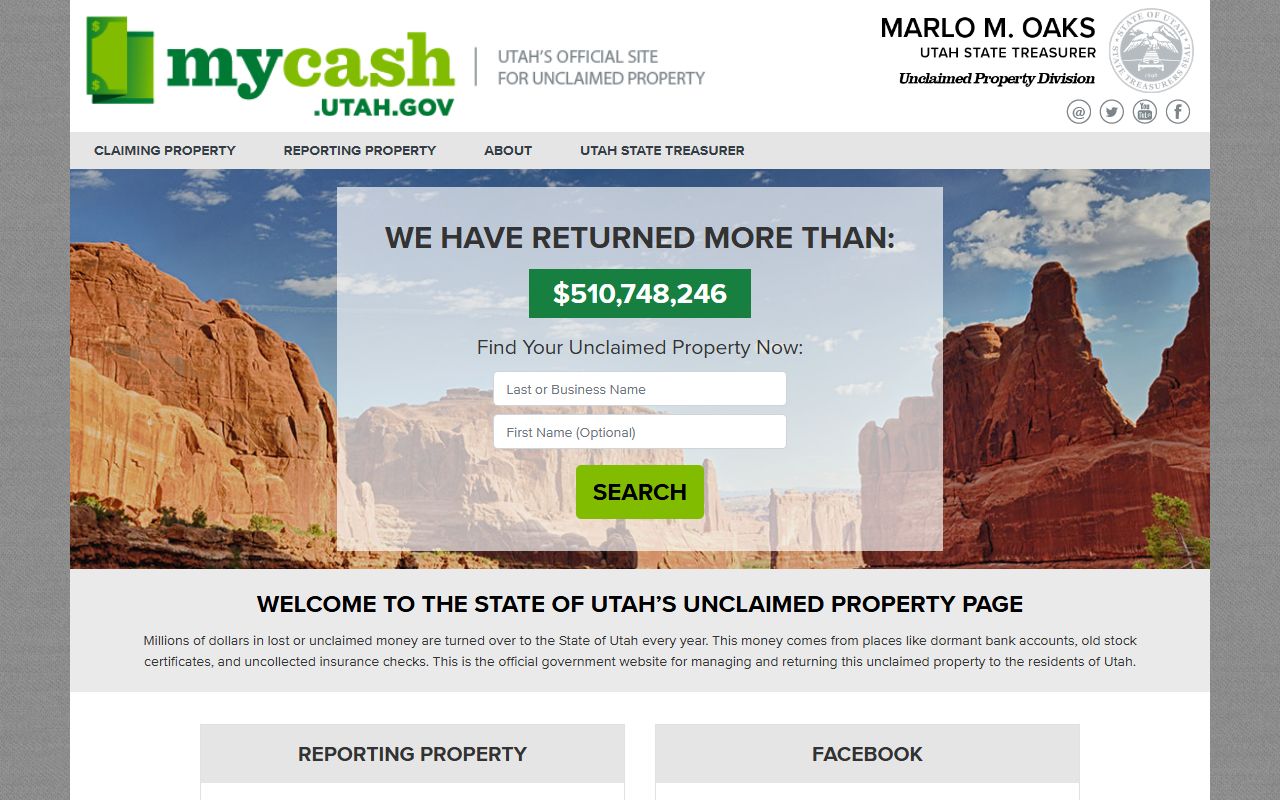
MyCash is the official Utah State Treasurer tool for St. George residents to locate unclaimed property held by the state.
If you need assistance beyond the online portal, call the Unclaimed Property Division at (801) 715-3300. The office is at 168 N 1950 W Suite 102, Salt Lake City, UT 84116. Mail goes to P.O. Box 140530, Salt Lake City, UT 84114-0530. Staff can help St. George residents with claim questions or verify if a property match is legitimate.
Types of Unclaimed Property in St. George
St. George is the economic center of southwestern Utah. It has a strong retail sector, multiple healthcare systems, Dixie State University (now Utah Tech University), a large retiree population, and a real estate market that has drawn residents from across the country. That diverse base means many kinds of unclaimed money get reported from the St. George area each year. Any of these can end up in the state database if the owner can't be reached.
Older residents in St. George sometimes discover forgotten accounts from financial institutions that merged or changed names over the years. People who retired here from other states may have accounts still sitting in those states. Families settling the estates of St. George residents often find property they didn't know about. And with a large vacation and seasonal rental market in the area, utility and security deposit refunds are especially common unclaimed property types.
Common unclaimed property types for St. George residents:
- Dormant checking and savings accounts
- Uncashed checks from past employers
- Security deposits from rentals or utility accounts
- Life insurance and annuity proceeds
- Stocks, dividends, or mutual fund balances
- Healthcare refunds and billing overpayments
- Retailer gift cards and store credits
Utah's dormancy periods vary. Wages and utility deposits go dormant after 1 year. Most bank accounts hit the threshold after 3 years. Money orders reach dormancy at 7 years, and traveler's checks at 15. After the period ends, St. George businesses must report and remit the property to the state by November 1 each year.
St. George Local Resources and County Offices
St. George City Hall is at 175 E 200 N, St. George, UT 84770. The official city website at sgcity.org covers all city departments and services. For questions about past city utility accounts, permit refunds, or other city-issued payments, contact the appropriate city department through the website. The city handles its own financial records separately from the state unclaimed property program.
The St. George Police Department manages physical property recovered by officers or taken into evidence. Found property, unclaimed items from resolved cases, and abandoned property all go through the police department's property process. The department holds items for the required period and issues public notice before disposal under Utah Code 77-11d-105. If you believe the St. George Police Department may have property that belongs to you, contact them through the city's police page.
The screenshot below shows the St. George Police Department page, where residents can find contact information and procedures for physical property claims.
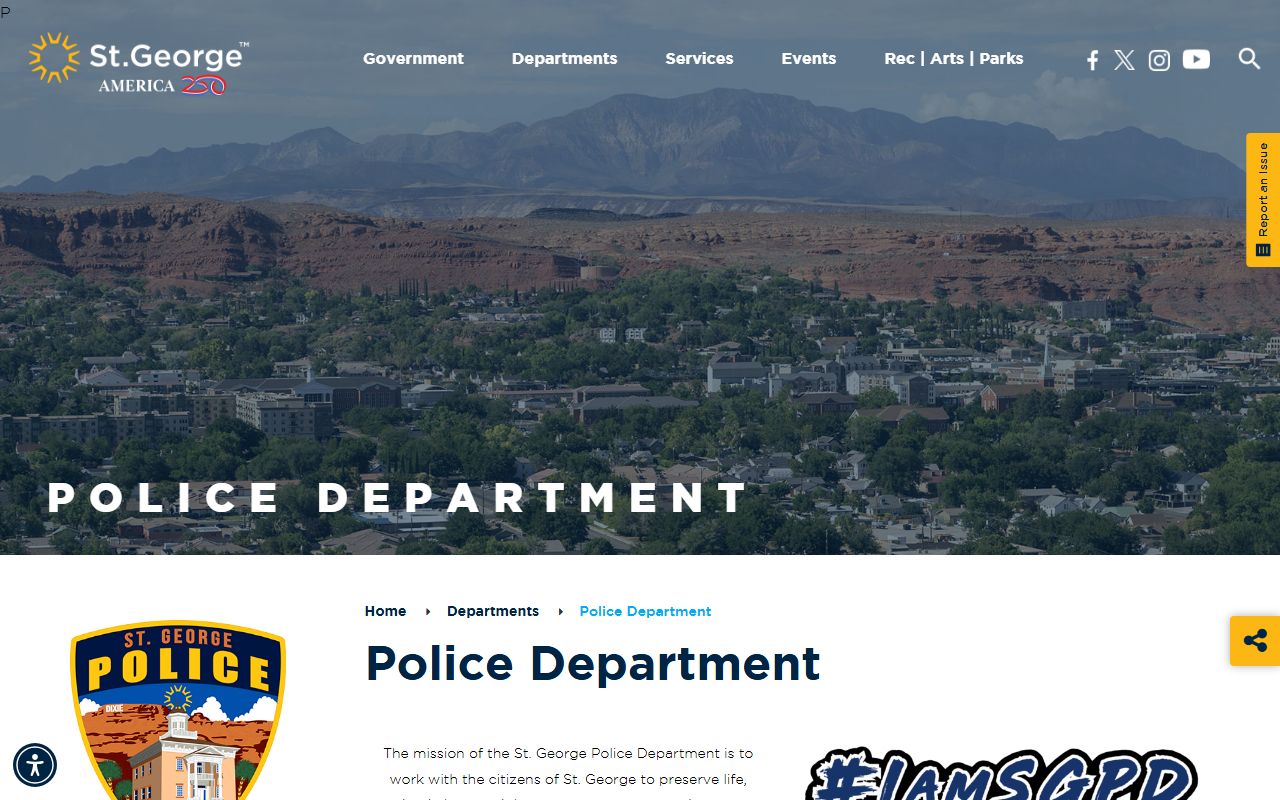
St. George police handle physical found property separately from the financial unclaimed money program managed by the state.
For the broader state program, St. George falls under Washington County. Visit the Washington County unclaimed money page for county-level context on institutions and reporting practices in southwestern Utah.
MissingMoney.com - National Property Search
St. George has attracted residents from across the country, particularly retirees and people relocating from Nevada, California, Arizona, and other western states. If you have lived in other states, you may have unclaimed property in those state systems. MissingMoney.com is a NAUPA-endorsed national database covering more than 39 states. You can search multiple states in one place without visiting each state's website separately.
The screenshot below shows MissingMoney.com, the national unclaimed property search tool that St. George residents can use to look for funds across multiple states.
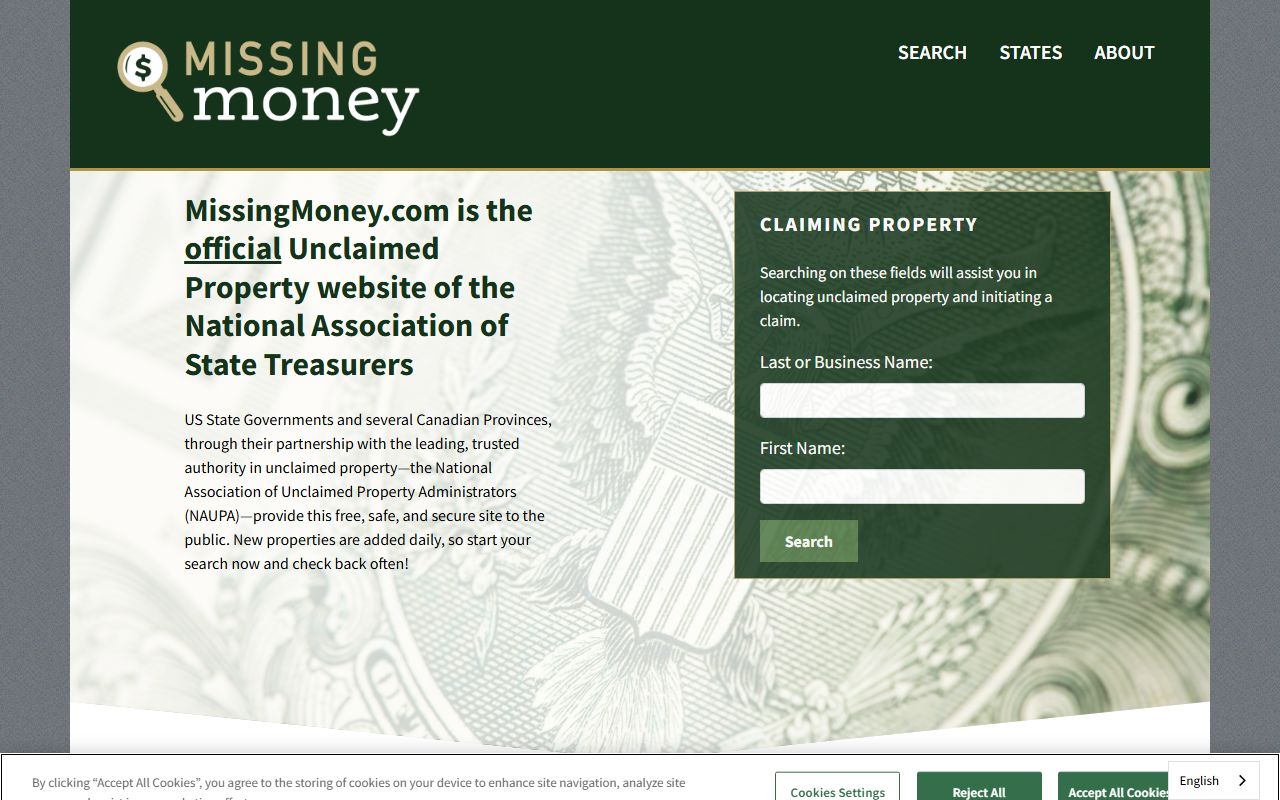
MissingMoney.com is free to use and is an especially valuable tool for St. George residents who moved from other states.
NAUPA's Utah page at unclaimed.org/reporting/utah/ provides background on how Utah manages its unclaimed property reporting and claim process. For St. George residents with ties to Nevada in particular, Nevada also maintains its own portal and you would need to search that separately. MissingMoney.com covers Nevada and most other western states.
How to Claim St. George Unclaimed Money
When you find a matching property at mycash.utah.gov, click "File a Claim" to begin. The process is online and mostly straightforward. You'll confirm your identity with a government-issued photo ID. For most St. George claims, a driver's license or state ID is sufficient. For larger claims or properties tied to business accounts, you may need additional documentation such as tax records or articles of incorporation.
Estate claims require legal documentation. If you're claiming property from a deceased St. George resident, bring a death certificate and proof that you have legal authority over the estate. That might be letters testamentary from a probate court, a copy of a will showing your entitlement, or a court order. The Utah State Treasurer reviews these documents before approving the claim. Processing typically takes a few weeks for straightforward claims and longer for complex ones.
There is no fee to claim your unclaimed money. The full amount comes to you. Some finder services offer to do this for you but charge a percentage of your payout. That fee is unnecessary since the process is free and not difficult to handle on your own. If you need help, call (801) 715-3300 during business hours. The office is at 168 N 1950 W Suite 102, Salt Lake City, UT 84116.
Utah Unclaimed Property Law
Utah's unclaimed property program runs under the Revised Uniform Unclaimed Property Act (RUUPA), codified at Title 67, Chapter 4a of the Utah Code. The full text is available at law.justia.com/codes/utah/title-67/chapter-4a/. This law covers all of Utah, including St. George and Washington County. It defines dormancy periods, holder reporting obligations, and the rights of property owners to claim their funds at any time.
Utah Code 67-4a-501 is the key provision that removes any time limit on filing a claim. This is significant for St. George, where many residents are retirees or people who have accumulated financial accounts over decades. No matter how old the property is, you can still claim it. The state holds it indefinitely until the rightful owner comes forward.
The program has been running since 1957 and has returned more than $131 million to Utah residents since 1984. In fiscal year 2022 alone, $30.6 million was returned. The state received nearly 497,000 new property reports in 2022 and held a record $77.2 million. About 1 in 5 Utahns has a match in the system. St. George residents, given the city's rapid growth and mix of retirees and newcomers, have good reason to search regularly.
Nearby Cities
St. George is the main city in southwestern Utah. The nearby qualifying city in Washington County has its own unclaimed money page.