
Cache County Unclaimed Money
Cache County residents, former residents, and heirs of people who lived or worked in the Logan area may have unclaimed money waiting at the Utah State Treasurer. The state holds dormant bank accounts, uncashed checks, insurance proceeds, student refunds, utility deposits, and other financial property until a valid claim is filed. Searching is free at mycash.utah.gov. Cache County's combination of university activity, dairy and agriculture, and a steady stream of students and workers passing through Logan creates a high volume of accounts that can go dormant and end up in the state system.
Cache County Quick Facts
How to Search Cache County Unclaimed Money
The Utah State Treasurer runs the official unclaimed property portal at mycash.utah.gov. It is free. No account is needed to search. Just enter a last name or business name and browse the results. The database updates each year as banks, insurers, employers, utilities, and other holders report dormant property to the state.
Cache County sits in northern Utah along the Idaho border. Logan is the county seat and the regional hub of the Cache Valley. Utah State University is located in Logan, and its presence shapes a lot about how unclaimed property accumulates in this county. Thousands of students pass through USU each year. Many come from out of state, others transfer or move after graduating, and some simply lose contact with accounts they opened during school. Student housing deposits, tuition refunds, and financial aid overpayments can all become unclaimed property. USU has a large endowment and research operation as well, which creates additional categories of dormant accounts.
Beyond the university, Cache County has a strong agricultural base, particularly in dairy. Farm families, co-op members, and workers in food processing plants are also potential sources of unclaimed funds. If you have ever lived or worked in Cache County, or are an heir of someone who did, a search at mycash.utah.gov is worth the few minutes it takes.
The Cache County Treasurer's office in Logan handles property tax collection and county finances, while the Utah State Treasurer holds unclaimed money reported by Cache County businesses and financial institutions.
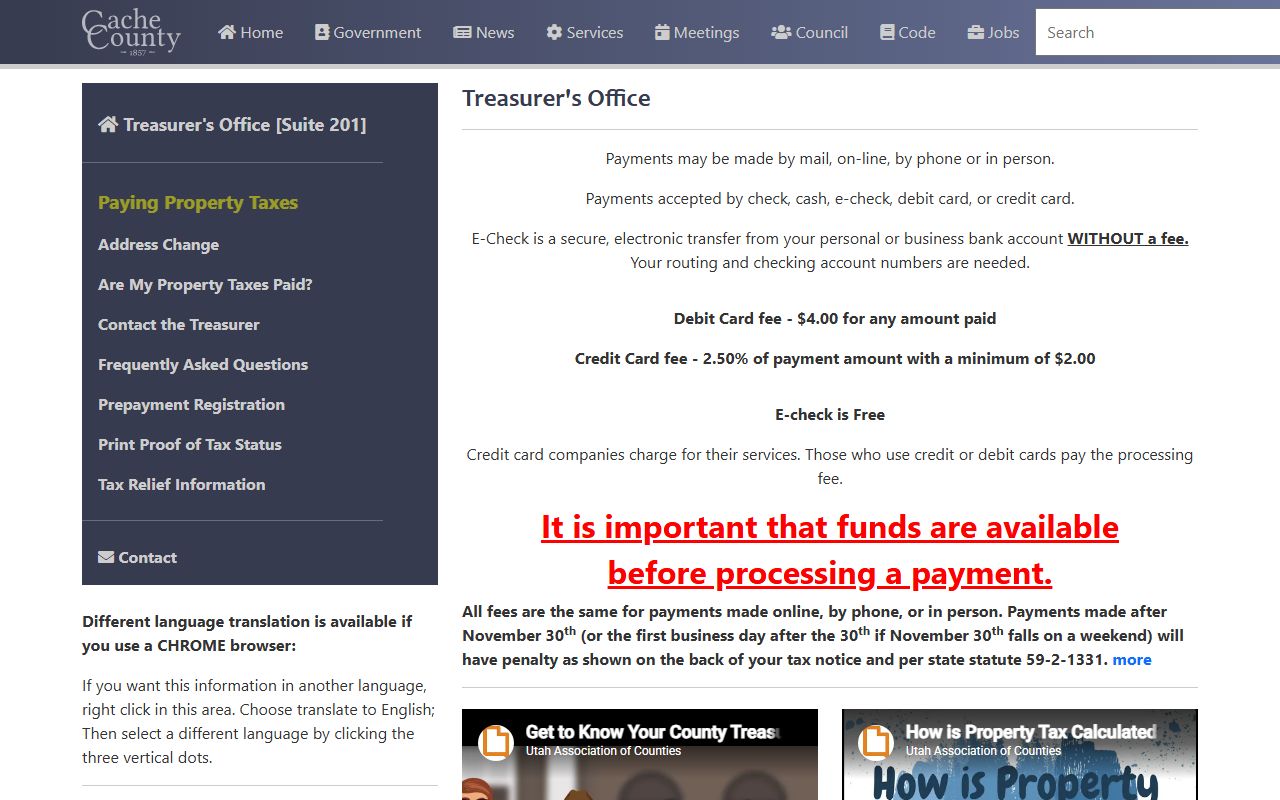
The Cache County Treasurer manages local tax collection and county investments. The office is open Monday through Thursday, 7am to 6pm, and closed on Fridays. If you need property tax records to support a claim, this is the right office to contact.
Types of Unclaimed Property in Cache County
Utah State University generates a category of unclaimed property that is specific to Cache County. Students who transfer, drop out, or graduate sometimes leave behind housing deposits, small account balances, or financial aid refunds without realizing it. These funds eventually transfer to the state when the institution can no longer locate the student. Former USU students living anywhere in the country should search using their name as it appeared on their enrollment records.
Agricultural income is another area to consider. Dairy co-ops, commodity payments, crop insurance payouts, and accounts at local farm credit institutions can go dormant when farm ownership changes or family members move away. Cache Valley has a particularly active dairy industry, and accounts tied to that sector show up in unclaimed property searches for this county.
Logan is also a regional center for healthcare, retail, and professional services. Dormant accounts from insurance policies, health savings accounts, and employer benefit plans add to the pool. When an employer closes, relocates, or changes ownership, employee accounts that were never fully distributed often end up in the state system.
Common categories that apply across Cache County include:
- Dormant checking and savings accounts
- Uncashed payroll, tuition refund, and financial aid checks
- Life insurance proceeds not collected after a death
- Utility and housing security deposits
- Stock dividends and brokerage account balances
- Safe deposit box contents
- Co-op distributions and farm credit balances
Under Utah Code Title 67, Chapter 4a, there is no deadline to file a claim. The state holds all property indefinitely.
Cache County Offices and Local Resources
The Cache County Courthouse is at 179 N Main Street, Suite 102, Logan, UT 84321. The main county number is (435) 755-1500. County offices handle property records, elections, vital records, and financial administration. If you need official documents to support an unclaimed property claim, these offices are the right place to start.
The Cache County Recorder maintains land records and property ownership documents in Logan, which can be useful when tracing property tied to real estate transactions in the area.
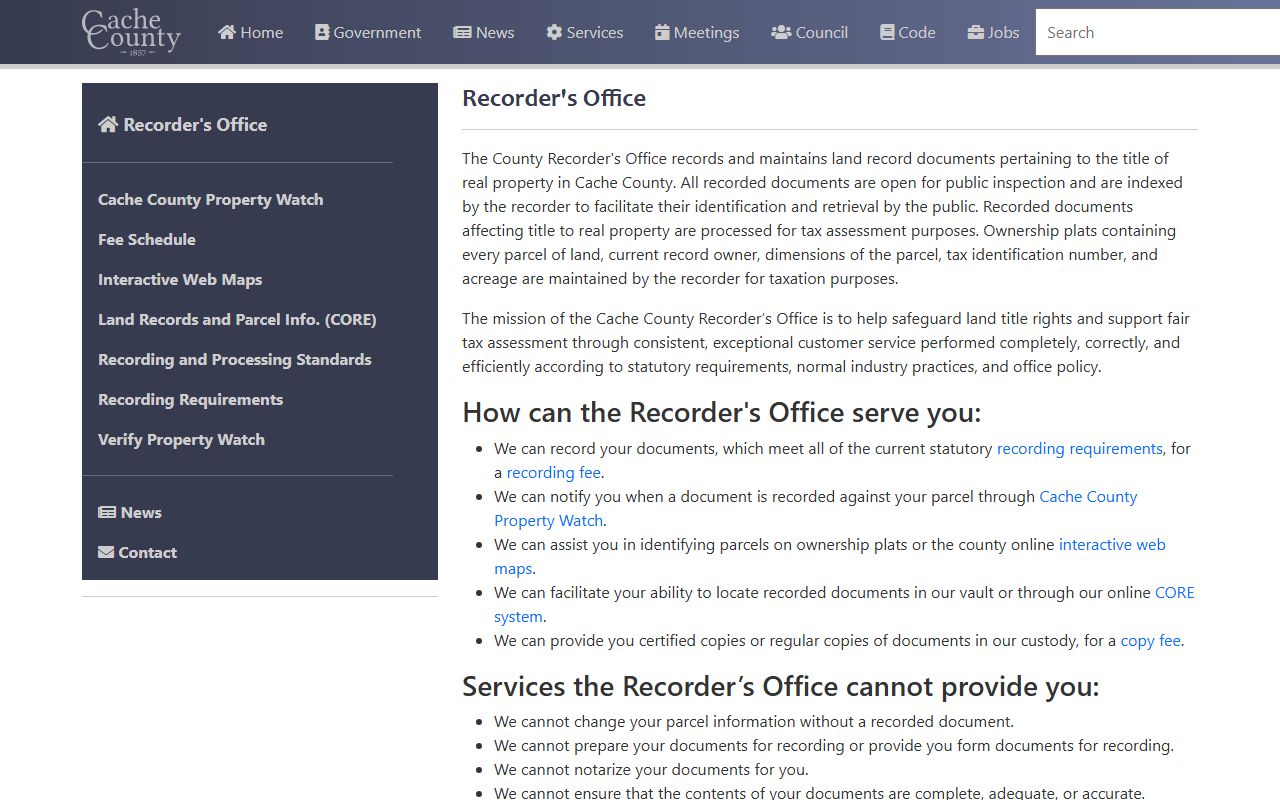
The Cache County Recorder keeps land records and property ownership documents for the county, accessible through the CORE online system. The office is open Monday through Thursday, 7am to 6pm. If you are claiming unclaimed property tied to a real estate transaction or old escrow balance, the recorder's records can help establish ownership.
The Cache County Clerk office in Logan processes marriage licenses, maintains election records, and issues certified document copies needed to support estate and probate claims.
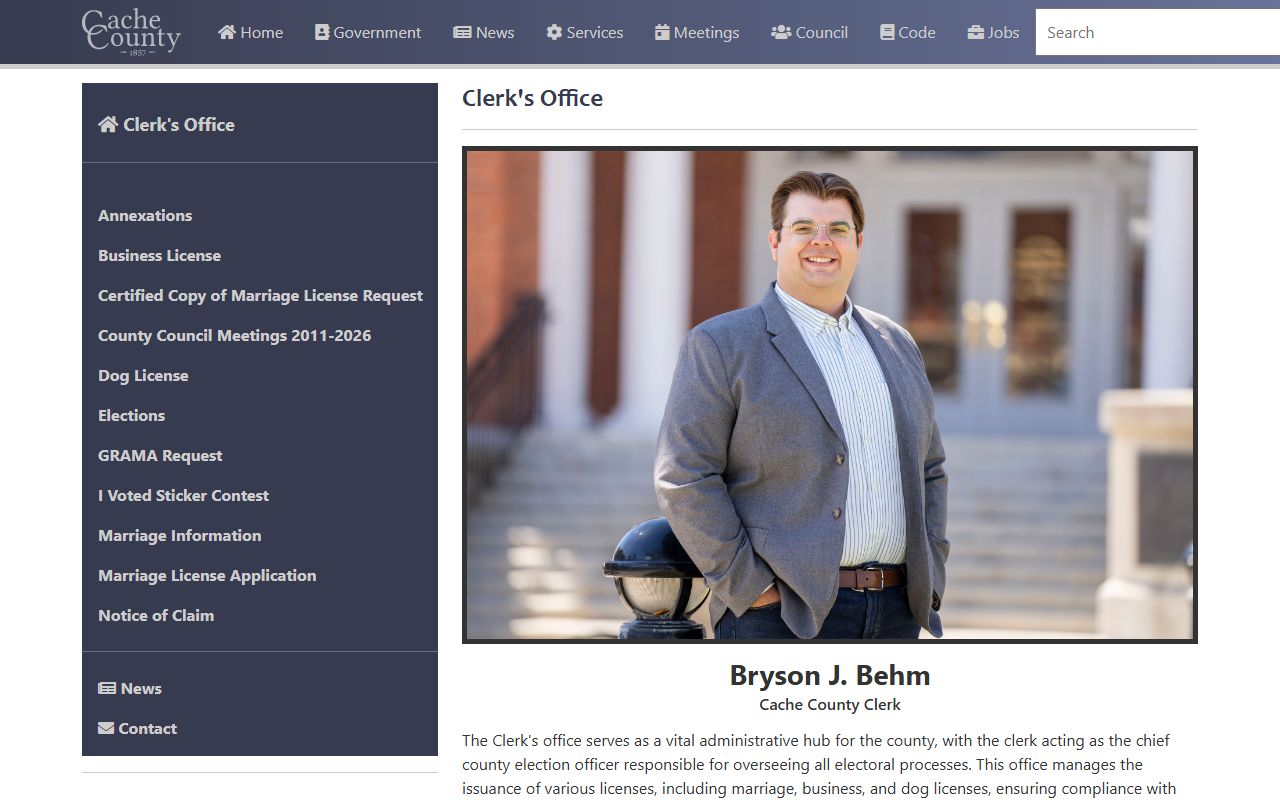
The Cache County Clerk handles marriage licenses, elections, and official records. Certified copies of marriage certificates are available for $9. The clerk's line is (435) 755-1460. Marriage and divorce records from this office are sometimes needed to establish identity when claiming property held under a former name.
The First District Court serves Cache County and handles civil, probate, and family matters. It is at 135 N 100 W, Logan, UT 84321, phone (435) 750-1300. Information is at utcourts.gov/courts/1st. If you are claiming on behalf of a deceased person's estate, probate records from this court establish your legal standing and are required as part of the claim documentation.
MissingMoney.com for Cache County Residents
MissingMoney.com is a free national search tool endorsed by the National Association of Unclaimed Property Administrators (NAUPA). It lets you search several state databases at once rather than visiting each state's site individually.
Cache County draws students and workers from Idaho, Nevada, and other states. Many former USU students moved across the country after graduation. Former Cache County residents who lived in other states before or after their time in Logan should check MissingMoney.com. If a match comes up in another state, the site directs you to that state's official portal to file the claim. No fees apply. The service does not process payments or take a share of any claim.
Run searches at both mycash.utah.gov and MissingMoney.com. Use all names you have gone by, including maiden names and prior surnames, since property records reflect the name at the time the account was opened.
The Utah State Treasurer's MyCash portal is updated annually with unclaimed money reported by Cache County banks, employers, USU, and other institutions in the Logan area.
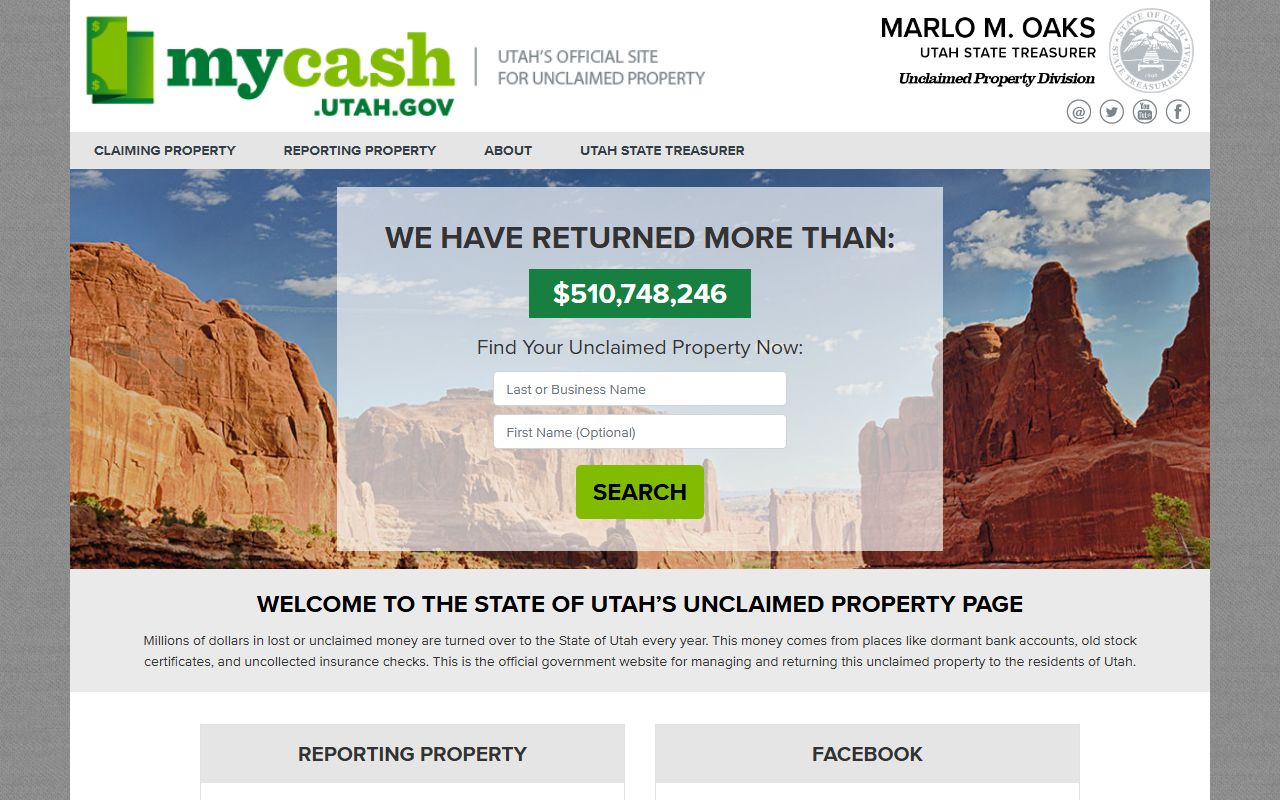
At mycash.utah.gov, search results display the holder's name and an estimated value range for each property. Click any match to begin the claim process.
How to Claim Cache County Unclaimed Property
Start at mycash.utah.gov. Search your name. If a match appears, click through to begin the claim. The portal walks you through every required step and tells you exactly what documents to gather based on the property type involved.
For most standard claims, you need a government-issued photo ID and proof of your Social Security number. A Social Security card, W-2, or 1099 showing both your name and SSN will work. If the property shows an old address or a former name, bring documents that link you to that identity. A marriage certificate, divorce decree, or old financial statement can make that connection.
Estate claims require more documentation. You need a certified death certificate for the deceased, proof of your legal authority over the estate (letters testamentary, a will, or a probate order from the First District Court), and your own government-issued photo ID. Gather these before you start the online claim form to avoid delays.
Submit online through the portal or by mail to: Utah State Treasurer, Unclaimed Property Division, P.O. Box 140530, Salt Lake City, UT 84114-0530. Questions can go to (801) 715-3300. There is no filing deadline. Under Utah Code 67-4a-501, claims are valid at any time. Track your claim status through the portal after submission.
Utah Unclaimed Property Law
Cache County unclaimed property is governed by the Revised Uniform Unclaimed Property Act, found in Utah Code Title 67, Chapter 4a. The law requires businesses to report and transfer dormant accounts to the state and sets dormancy periods for different types of property.
Wages and utility deposits become unclaimed after one year. Checking accounts, savings accounts, most stocks, and insurance proceeds take three years. Money orders reach the state after seven years. Traveler's checks take 15 years. Once transferred, no property ever expires. The right to claim passes to heirs indefinitely.
Utah has returned more than $131 million to claimants since 1984. About $30.6 million was returned statewide in fiscal year 2022. The state currently holds approximately $77.2 million. An estimated one in five Utahns has something on record. Full program details are at treasurer.utah.gov/unclaimed-property. State-by-state reporting data is at unclaimed.org/reporting/utah.
Cities in Cache County
Logan is the largest city in Cache County and has its own unclaimed money page with local courthouse details and search resources.
Nearby Counties
Unclaimed property from neighboring counties is searchable through the same state portal. These pages have local details for each surrounding area.