
Grand County Unclaimed Money Search
Grand County residents and former residents, including the many seasonal workers who have passed through Moab over the years, may have unclaimed money held by the Utah State Treasurer from old bank accounts, uncashed wages, real estate escrow funds, or dormant investment accounts. The search is free at mycash.utah.gov and takes only minutes. This page walks through how to search, what types of unclaimed property come from the Moab area, and how to complete a claim with no time limit hanging over you.
Grand County Quick Facts
How to Search Grand County Unclaimed Money
Start at mycash.utah.gov, the Utah State Treasurer's free public search tool. Type a last name or business name to pull up any matching unclaimed property. No registration or login is required. The database includes all property reported by Utah holders, so Moab-area hotels, outfitters, restaurants, banks, real estate firms, and other businesses that have reported dormant accounts all feed into this one searchable portal. If something comes up under your name, you can start a claim directly from the results.
Moab sits at the gateway to Arches National Park and Canyonlands National Park. It draws millions of visitors each year and employs a significant seasonal workforce. Guides, hotel staff, restaurant workers, and outfitters all come and go with the seasons. Many of these workers open bank accounts in Moab and leave them behind when they move on. Others receive their last paycheck to a forwarding address that no longer works. Those dormant accounts and uncashed checks eventually reach the state as unclaimed property.
Real estate in Moab has seen substantial activity and price growth. Property investors, developers, and buyers from outside the area sometimes have escrow funds or earnest money deposits that do not get returned correctly. Those funds can show up in the unclaimed property database. Search every name you have used, including names from prior marriages, maiden names, and business names.
The Utah State Treasurer's MyCash portal is the official search tool for Grand County unclaimed money. All property from Moab employers, banks, and real estate firms is searchable here at no cost.
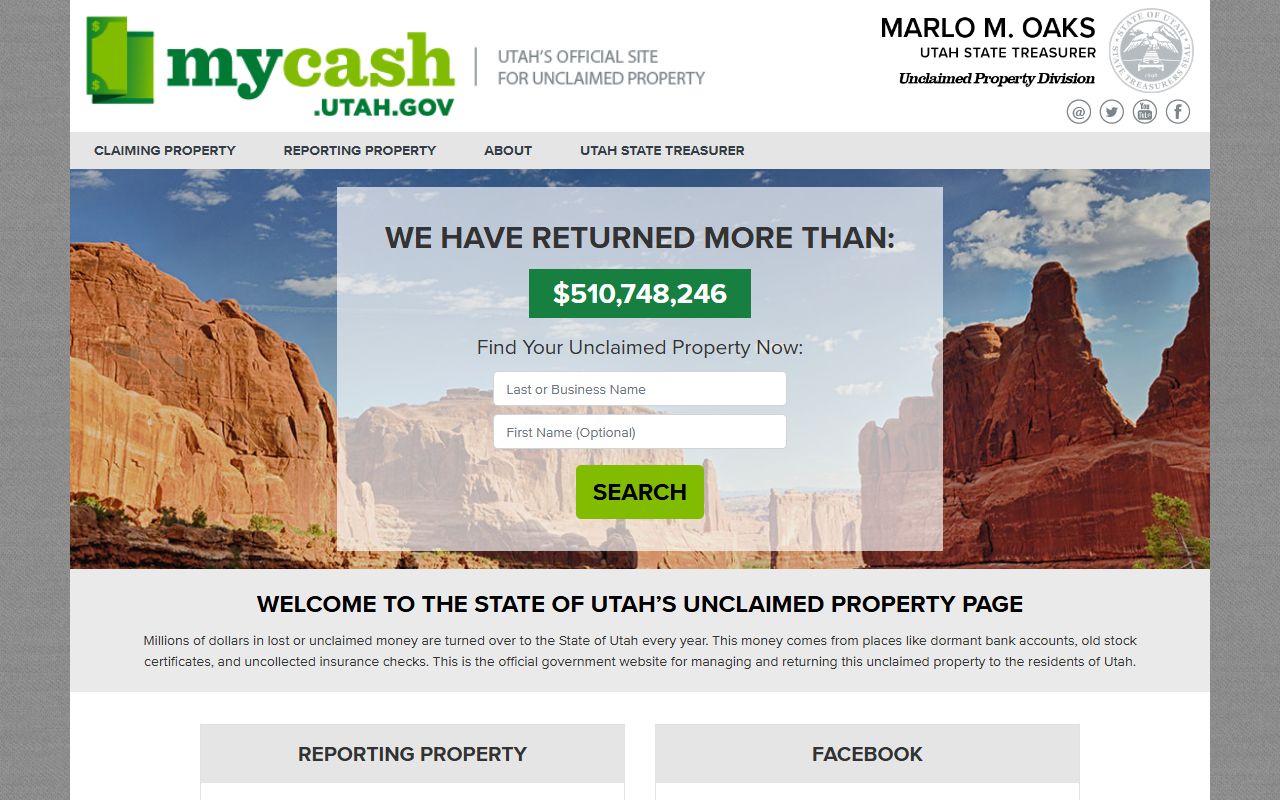
The mycash.utah.gov database is updated annually as new property transfers arrive from Utah businesses. The state holds roughly $77.2 million in unclaimed funds. Moab's transient population and high property values make Grand County a productive place to search.
Types of Unclaimed Property in Grand County
Seasonal employment is the top driver of unclaimed property in Grand County. Arches and Canyonlands see millions of visitors annually, and the local workforce turns over more than in stable residential communities. Outdoor guide companies, Jeep tour operators, bike rental shops, and hotels all generate payroll. Workers who leave Moab at the end of a season and change addresses may never collect a final check or close a local account. Those wages and balances become unclaimed property after the required dormancy period.
Real estate-related unclaimed property is more significant in Grand County than in most rural Utah counties. Moab's property market has attracted investors from throughout the region and beyond. Escrow accounts from real estate closings, refunded deposits from failed transactions, and overpayments on title insurance or settlement costs can all become unclaimed when one party to a deal moves or changes contact information. If you bought or sold property in the Moab area, it is worth running a search.
The mountain biking industry around Moab has grown into one of the largest of its kind in the country. Bike shop employees, trail crew workers, and event staff are all part of the local workforce. Wages from short-term or contract work in the outdoor recreation industry contribute to the county's unclaimed property flow. Insurance policies taken out by short-term residents are another common category.
Long-term Grand County families also hold more unclaimed property than they realize. Old savings accounts from Moab banks, life insurance policies from decades ago, and stock dividends on shares held in a relative's name are all worth checking. The state has held some property for many years.
Grand County Local Offices
The Grand County Courthouse is at 125 E Center Street, Moab, UT 84532. The main county phone number is (435) 259-1321. Office hours are weekdays during regular business hours.
The Grand County Clerk/Auditor handles elections, official records, and financial administration. If you need a certified copy of a recorded instrument, a marriage certificate, or another official county document to support an unclaimed property claim, the Clerk/Auditor is the right office. This office also maintains records that can help establish property ownership history, which may be relevant for tax sale surplus claims.
The Grand County Treasurer manages property tax collection and the annual tax sale for delinquent parcels. When a tax sale produces more than what is owed, the surplus is held for one year and then forwarded to the state as unclaimed property if not claimed. The Treasurer can give you information about past tax sales involving a property you once owned in Grand County.
MissingMoney.com - Multi-State Search
After searching mycash.utah.gov, run a second check at MissingMoney.com. This is a free tool endorsed by NAUPA, the National Association of Unclaimed Property Administrators. It searches participating state databases all at once, which is useful if you have worked or lived in Colorado, Arizona, or other states near Grand County.
MissingMoney.com is the NAUPA-endorsed free search tool that searches multiple states at once, ideal for Grand County residents who have lived in Colorado or other neighboring states.
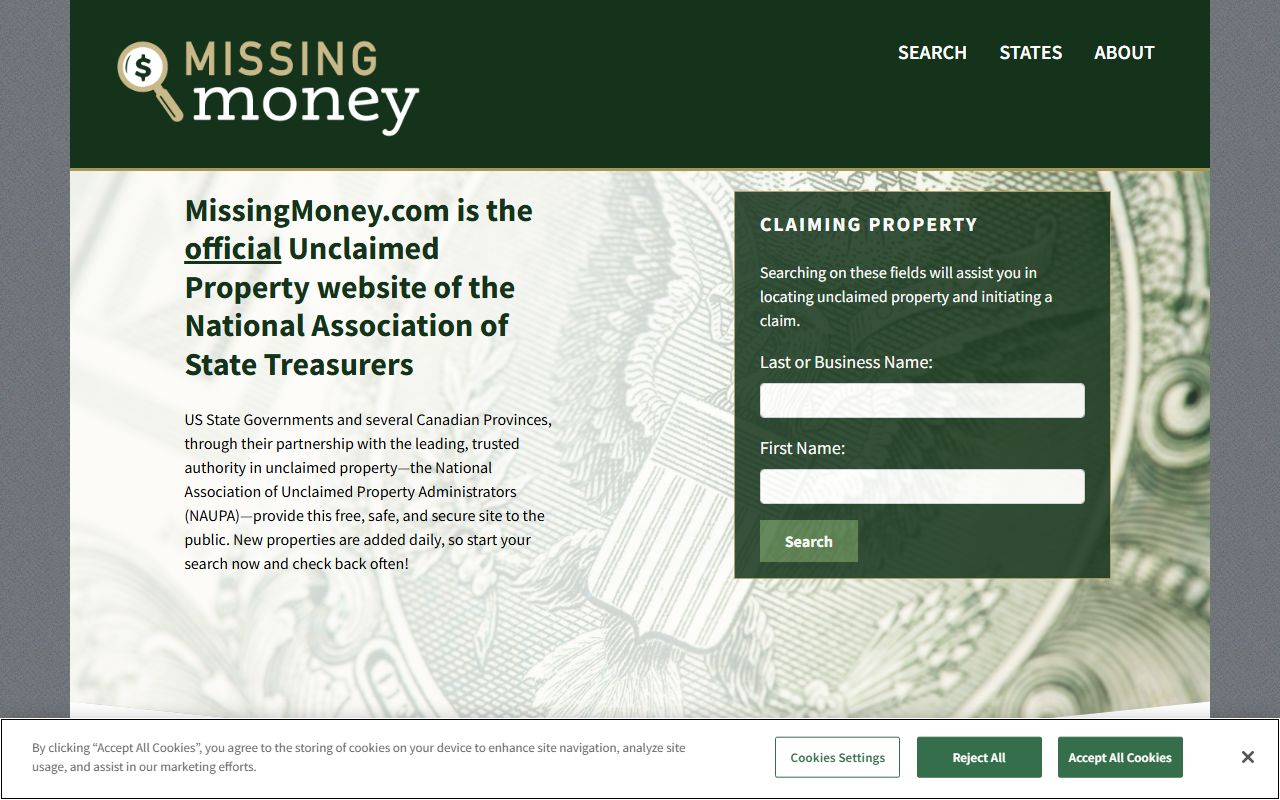
Moab's proximity to Colorado means many seasonal workers move between the two states. MissingMoney.com covers Colorado, Nevada, and many other states at once. Use both search tools for complete coverage. Some recently transferred Utah property may appear on mycash.utah.gov before it shows in the NAUPA database, so start with the state portal and then use MissingMoney.com to check other states.
Filing a Claim for Grand County Unclaimed Money
When mycash.utah.gov shows a match, click the listing to begin the claim. The portal explains what is needed for each type of property. Standard personal claims require a government-issued photo ID and your Social Security card or a document showing your SSN.
Real estate-related claims may need additional documentation. A recorded deed, a title insurance policy, a closing statement, or a letter from the title company can all help establish your connection to the funds. For wage claims from employers that are no longer in business, a pay stub, a W-2, or another payroll document connecting you to that employer is helpful.
Estate claims need a death certificate for the original owner and proof of legal authority such as letters testamentary from a probate court or a court-issued order naming you as administrator. Business claims require articles of incorporation, an EIN letter, or proof of authorized representative status. Submit online through the portal or mail to: Utah State Treasurer, Unclaimed Property Division, P.O. Box 140530, Salt Lake City, UT 84114-0530. Phone: (801) 715-3300. Under Utah Code 67-4a-501, there is no deadline to file.
Utah Unclaimed Property Law
Utah's unclaimed property rules are set out in Title 67, Chapter 4a of the Utah Code. Businesses and financial institutions must report dormant accounts to the state each year by November 1. Bank accounts become reportable after three years of inactivity. Wages and utility deposits reach dormancy after one year. Money orders go dormant at seven years, traveler's checks at fifteen.
Legal experts have noted Utah's unclaimed property law as one of the more owner-friendly in the country, with no time limit on claims and a clear process for heirs and estates.
Under Utah Code 67-4a-501, the state holds unclaimed property permanently and the owner's right to claim never expires. Utah has returned over $131 million since the program started and returned $30.6 million in fiscal year 2022 alone. The state acts as a custodian, not a permanent holder. The money waits for you.
Nearby Counties
Grand County borders a small number of other Utah counties, and former residents may want to check those too. San Juan County lies to the south and east, covering a vast area of southeast Utah including Bears Ears National Monument. Emery County is to the west, sharing some of the Colorado Plateau landscape. Carbon County is to the northwest, with Price as its county seat. All unclaimed property in these counties is part of the same Utah state database at mycash.utah.gov.