
Find Emery County Unclaimed Money
Emery County residents and former residents may have unclaimed money sitting with the Utah State Treasurer, including dormant savings accounts, old coal company wages, insurance proceeds, and utility deposits left behind when people moved away from the county's small towns. The search is free at mycash.utah.gov, and there is no time limit to claim what is yours. This page covers the search process, the most common property types in Emery County, and how to complete a claim from start to finish.
Emery County Quick Facts
How to Search Emery County Unclaimed Money
Go to mycash.utah.gov and type your last name or business name into the search field. No login is needed. The portal pulls from all reported unclaimed property across Utah, which means coal operators, banks, insurance companies, utilities, and employers all feed their dormant accounts into the same searchable database. If your name comes up, you can start a claim right away.
Emery County has a long history in coal production. For decades, mines in the Emery and Carbon county area employed thousands of workers. As coal operations slowed and some closed, many workers relocated to other parts of Utah or out of state entirely. Uncashed payroll checks, dormant savings accounts opened near the mines, and pension fund balances can all sit in the unclaimed property database for years. If you or a family member worked in coal mining in this region, a search is worth the few minutes it takes.
Run a search under every name you have used. That includes maiden names, names from a previous marriage, and any business names you have owned. Check names of deceased relatives too, since heirs can claim property belonging to an estate.
The Utah State Treasurer's MyCash portal covers all unclaimed property from Emery County holders, including former coal operators, rural banks, and insurance companies serving the San Rafael Swell area.
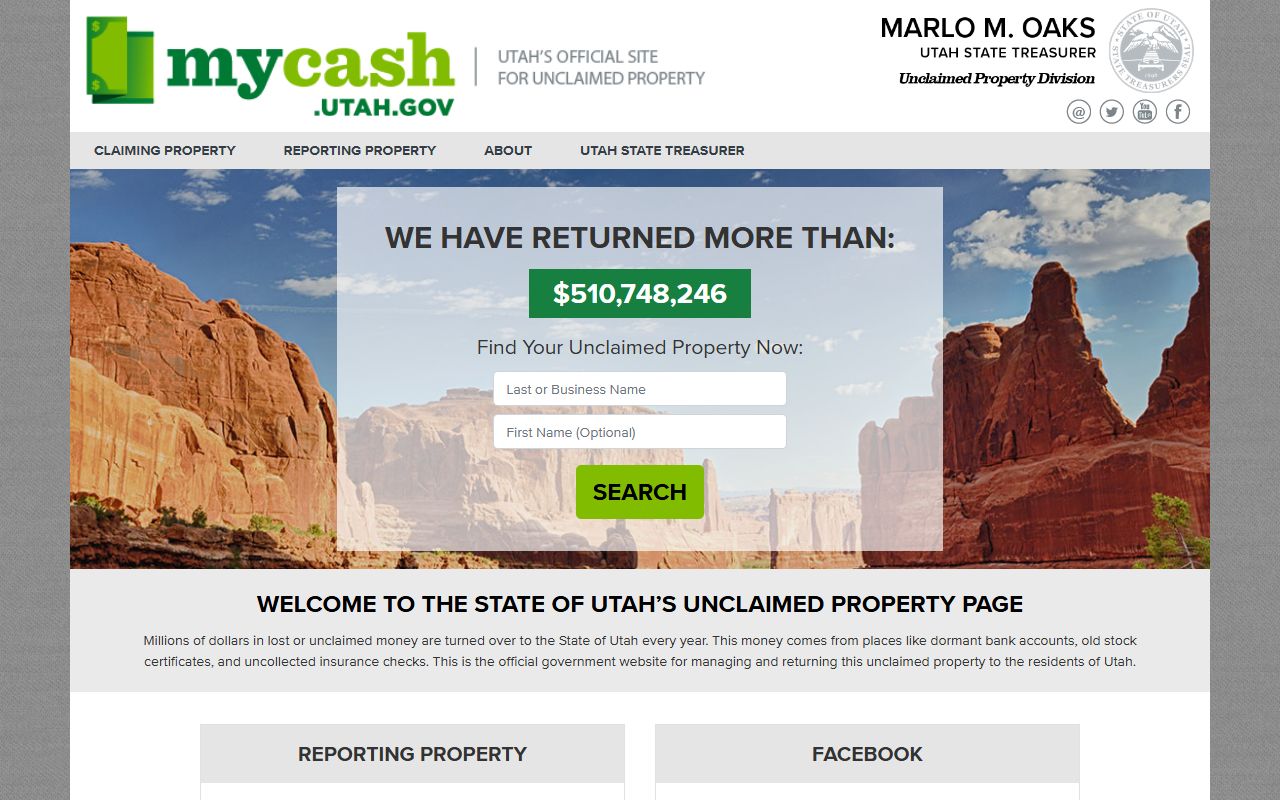
The mycash.utah.gov portal is maintained by the Utah State Treasurer and updated each year as new property is transferred. Approximately one in five Utahns has unclaimed property on record. Emery County's rural and mobile population history means a higher-than-average share of past residents may have accounts in the database.
Types of Unclaimed Property in Emery County
Coal mining is the defining industry in Emery County's economic history. The Emery coalfields once supported mines throughout the county. Unclaimed wages from those operations, particularly from the later decades of the industry when employment was less stable, are one of the more common property types showing up from this area. Former miners who moved to Salt Lake City or other metro areas sometimes left bank accounts open with small balances that eventually went dormant and ended up with the state.
Life insurance policies are another frequent category for rural counties like Emery. Older policies, sometimes purchased through an employer or union, may have been forgotten by the insured's family. When the policy matures or the insured passes away and the insurer cannot locate the beneficiary, the proceeds go to the state. A family member researching an older relative's finances will sometimes find an insurance policy they never knew existed.
Emery County sits along I-70, and the San Rafael Swell has drawn more visitors in recent years. Utility deposits from former residents of Castle Dale, Ferron, Huntington, and other towns are common. Property tax sale surplus funds are another category, though less frequent given the county's modest property values.
Dormant checking and savings accounts from Emery County's community banks and credit unions make up a consistent portion of what flows to the state each year. Rural residents who moved to find work and did not close their local accounts are the main source.
Emery County Local Offices
The Emery County Courthouse is at 75 E Main Street, Castle Dale, UT 84513. The main county number is (435) 381-5492. County offices are open weekdays during regular business hours.
The Emery County Clerk/Auditor office manages elections, financial administration, and official county records. The Clerk/Auditor is the place to go if you need a copy of a county record to support an unclaimed property claim. Marriage certificates, recorded instruments, and other official documents can establish identity and legal relationships that may be required depending on the type of property you are claiming.
The Emery County Treasurer handles property tax collection across the county. If a former property you owned went to tax sale for delinquent taxes, and the sale generated more than what was owed, the surplus may have been forwarded to the state after one year. The Treasurer's office can give you details on past tax sales involving specific parcels.
MissingMoney.com - Second Search Tool
After running a search on mycash.utah.gov, check MissingMoney.com as well. This is a free multi-state search tool endorsed by NAUPA, the National Association of Unclaimed Property Administrators. It searches multiple state databases at the same time, which is useful if you have ever lived or worked outside of Utah.
MissingMoney.com is the NAUPA-endorsed multi-state unclaimed property search. Emery County residents who have lived in Colorado, Wyoming, or other neighboring states should search here in addition to mycash.utah.gov.
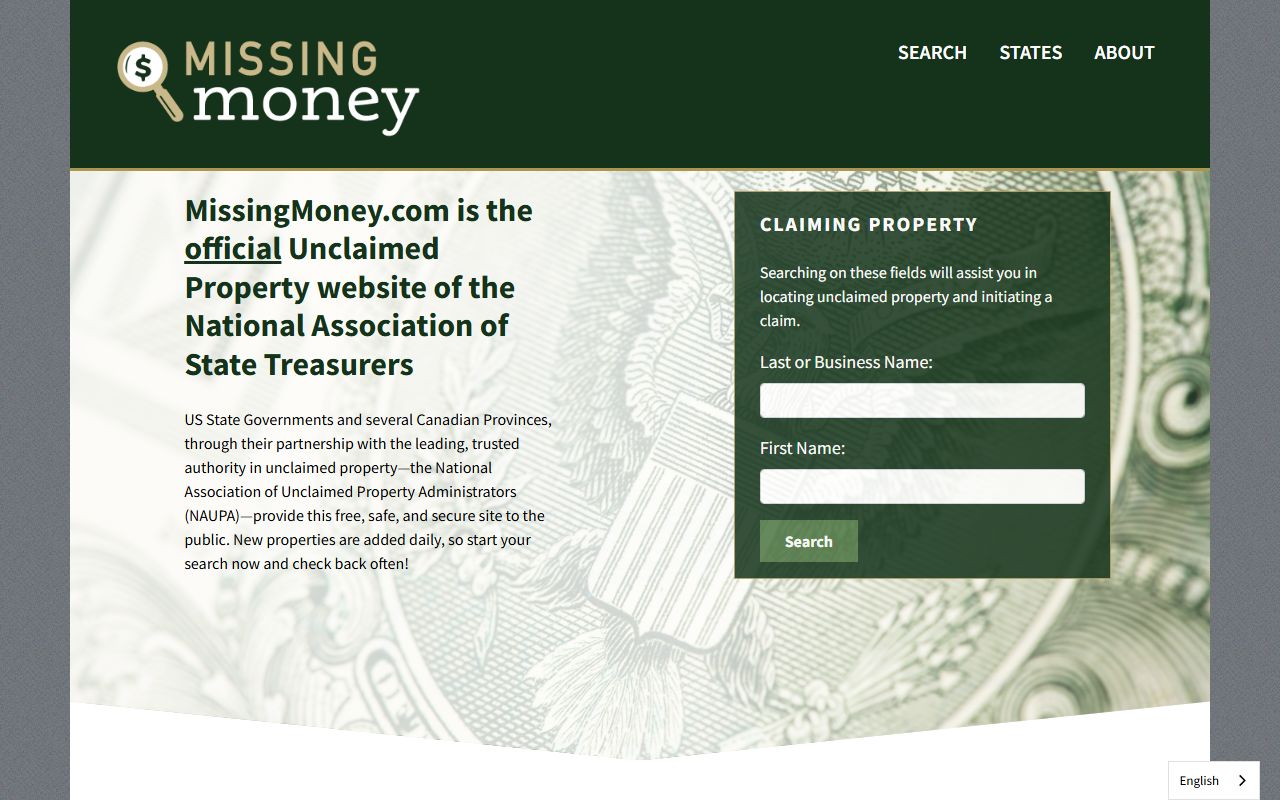
The MissingMoney.com database is updated regularly by participating states, though some recently transferred Utah property may appear on mycash.utah.gov first. Use both search tools together for the most complete picture. Coal workers who moved through multiple states are especially likely to have unclaimed property in more than one state's database.
Filing a Claim for Emery County Unclaimed Money
If mycash.utah.gov shows a match under your name, click the property to start the claim process. The site guides you through what documents are needed. For a standard personal claim, a government-issued photo ID and your Social Security card or an equivalent document showing your SSN are the core requirements.
Coal pension or wage claims, especially older ones tied to mining companies that have closed or reorganized, may need additional documentation. A pay stub, a union card, or a W-2 from the relevant time period can help establish your connection to the employer. If the original holder is deceased, a death certificate and proof of your legal authority over the estate, such as letters testamentary from a probate court, are required.
Business claims need entity documentation: articles of incorporation, an EIN letter, or evidence that you are an authorized representative of the company. Dissolved businesses may need dissolution paperwork as well. Once your documents are ready, submit online or by mail: Utah State Treasurer, Unclaimed Property Division, P.O. Box 140530, Salt Lake City, UT 84114-0530. Phone: (801) 715-3300. Under Utah Code Title 67, Chapter 4a, there is no deadline. Your right to claim does not expire.
Utah Unclaimed Property Law
Utah's unclaimed property rules come from Title 67, Chapter 4a of the Utah Code, which adopted the Revised Uniform Unclaimed Property Act. Every year by November 1, Utah businesses must report all dormant accounts to the state. Dormancy periods vary by property type. Most bank accounts are reportable after three years of inactivity. Wages and utility deposits become reportable after one year. Money orders reach dormancy at seven years, and traveler's checks at fifteen.
The Utah State Treasurer's unclaimed property program has held and returned funds to Utahns since 1984, with over $131 million returned to date.
Under Utah Code 67-4a-501, the state holds unclaimed property permanently and there is no expiration date on the owner's right to claim. Utah returned $30.6 million to rightful owners in fiscal year 2022 alone and has returned over $131 million since the program started. The state does not keep the money; it holds it for the owner until a valid claim is made.
Nearby Counties
Emery County borders several other counties, and former residents may have property in those databases too. Carbon County is to the north and shares the coal mining history that makes this part of Utah distinctive. Grand County lies to the east, anchored by Moab and its outdoor recreation economy. Garfield County is to the south along the Colorado Plateau. Sevier County and Sanpete County border to the west. All unclaimed property from these counties is searchable through the same state portal at mycash.utah.gov.