
Salt Lake County Unclaimed Money
Salt Lake County holds more unclaimed property than any other county in Utah. With over 1.2 million residents and a major concentration of employers, financial institutions, and government agencies, the volume of dormant accounts, uncashed checks, and uncollected insurance proceeds held by the Utah State Treasurer from Salt Lake County is substantial. Searching is free at mycash.utah.gov, and about one in five Utahns statewide has an unclaimed property match. In Salt Lake County, the odds are at least as high. Anyone who has ever lived or worked here should run a search.
Salt Lake County Quick Facts
How to Search Salt Lake County Unclaimed Money
The Utah State Treasurer's portal at mycash.utah.gov is the official starting point. It is free. No account or login is needed. Enter a last name or business name and review the results. The database updates each year after the November 1 reporting deadline, when banks, insurers, employers, and other holders submit property they have been unable to return to its owners.
Salt Lake County is home to Salt Lake City, the state capital, as well as a dense cluster of large employers across multiple industries. Intermountain Healthcare, the University of Utah, Delta Air Lines, numerous technology companies, and many state and federal government agencies all operate here. The sheer number of employers means the volume of unclaimed wages, pension distributions, and benefit reimbursements tied to the county is higher than anywhere else in Utah. People who worked for large organizations and later moved away often have uncollected funds that they do not know about.
The county also has a large and diverse population, including significant immigrant communities and many people who have relocated from other states or countries. When people move frequently or face language barriers, financial accounts can go dormant or checks can go uncashed. The state holds all of it indefinitely under Utah Code Title 67, Chapter 4a, and anyone with a valid claim can file at any time with no cost and no deadline.
The Salt Lake County Treasurer manages billions in local tax revenue annually and maintains property records that can support unclaimed money claims for county residents and businesses.
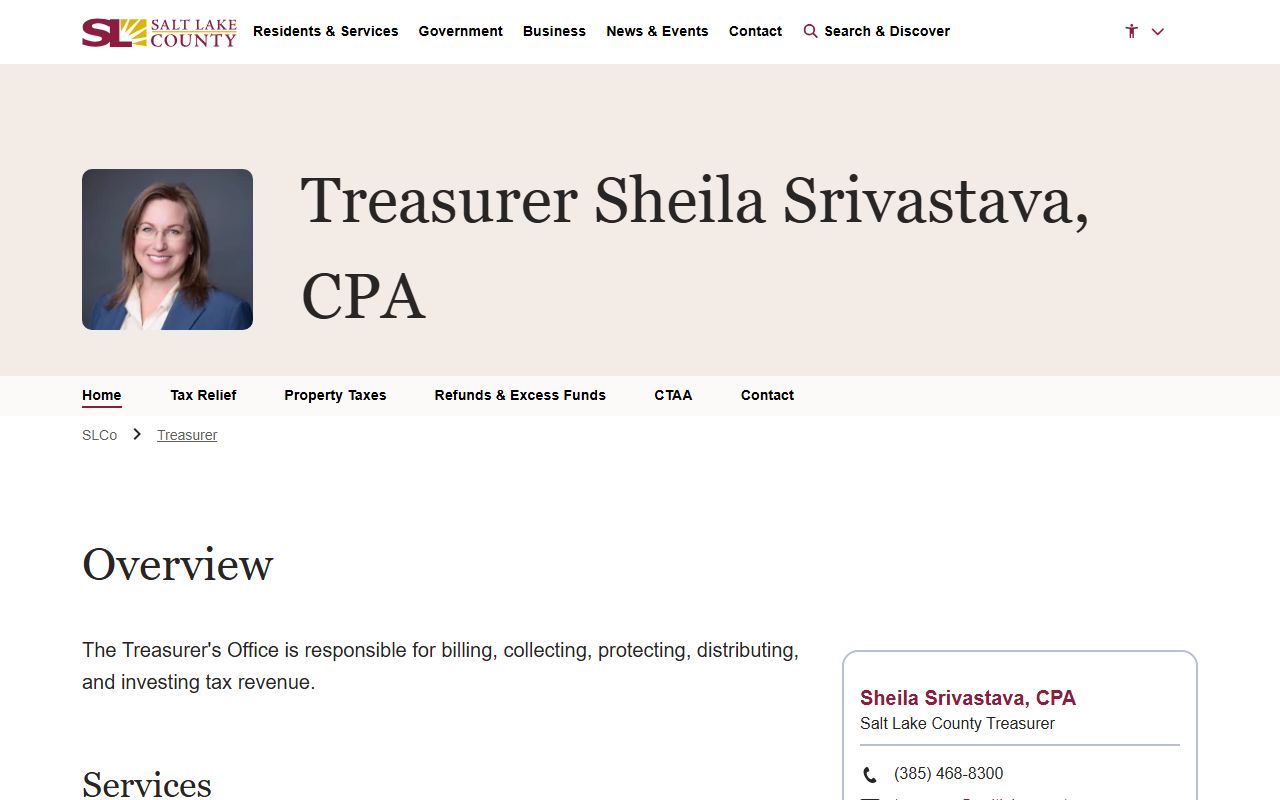
While property tax records from the Salt Lake County Treasurer are separate from the state's unclaimed property program, they can serve as supporting documentation when you need to prove a historical connection to a Salt Lake County address.
Scale of Unclaimed Property in Salt Lake County
Salt Lake County accounts for a disproportionate share of Utah's total unclaimed property volume. The statewide total held by the Utah State Treasurer reached $77.2 million in 2022, and $30.6 million was returned to claimants in fiscal year 2022 alone. Since the program began in 1984, the state has returned over $131 million total. Salt Lake County, as home to more than a third of Utah's entire population and the state's primary commercial hub, contributes a large portion of both the property collected and the claims paid out each year.
The major employers in Salt Lake County generate high volumes of dormant payroll accounts, final paychecks that were returned as undeliverable, and pension distributions that did not reach retirees after address changes. Financial institutions headquartered or with major operations here hold dormant savings accounts, uncashed cashier's checks, and certificate of deposit proceeds. Insurance companies with offices in Salt Lake City hold uncollected life insurance proceeds from policies where the insurer lost contact with beneficiaries. All of this property flows to the state after the applicable dormancy period and waits in the public database for claimants to find it.
If you or a family member ever worked for a major Salt Lake County employer, attended the University of Utah, received medical care at Intermountain Healthcare, or held a bank account with a local credit union or bank branch, it is worth taking a few minutes to run a search. Even small accounts are worth claiming, and there is no cost.
Salt Lake County Offices and Records
Several county offices maintain records that can support an unclaimed money claim for Salt Lake County property. The Salt Lake County Treasurer, currently Sheila Srivastava CPA, collects roughly $2 billion in tax revenue annually and maintains detailed property tax records. The office is at 2001 S State St, Suite N1-200, Salt Lake City, UT 84190, and can be reached at (385) 468-8300. Office hours are Monday through Friday, 8 a.m. to 5 p.m. Property tax records from this office can establish historical property ownership in Salt Lake County, which is sometimes needed when supporting a claim.
The Salt Lake County Assessor handles property valuation and maintains an interactive parcel search tool. The Assessor's office is at (385) 468-8000 and can be reached by email at assessor@slco.org. If you need to document the value or ownership history of a specific parcel in connection with an unclaimed property claim, the Assessor is a starting point. The Salt Lake County Recorder, located at 2001 S State St, Suite N1-600, is the official keeper of all real property records for the county. Their office number is (385) 468-8145, and they hold deeds, title transfers, and other official documents that can sometimes help establish a claimant's connection to the county.
The Salt Lake County Assessor maintains an interactive parcel search tool with property ownership records that can support unclaimed money claim documentation.
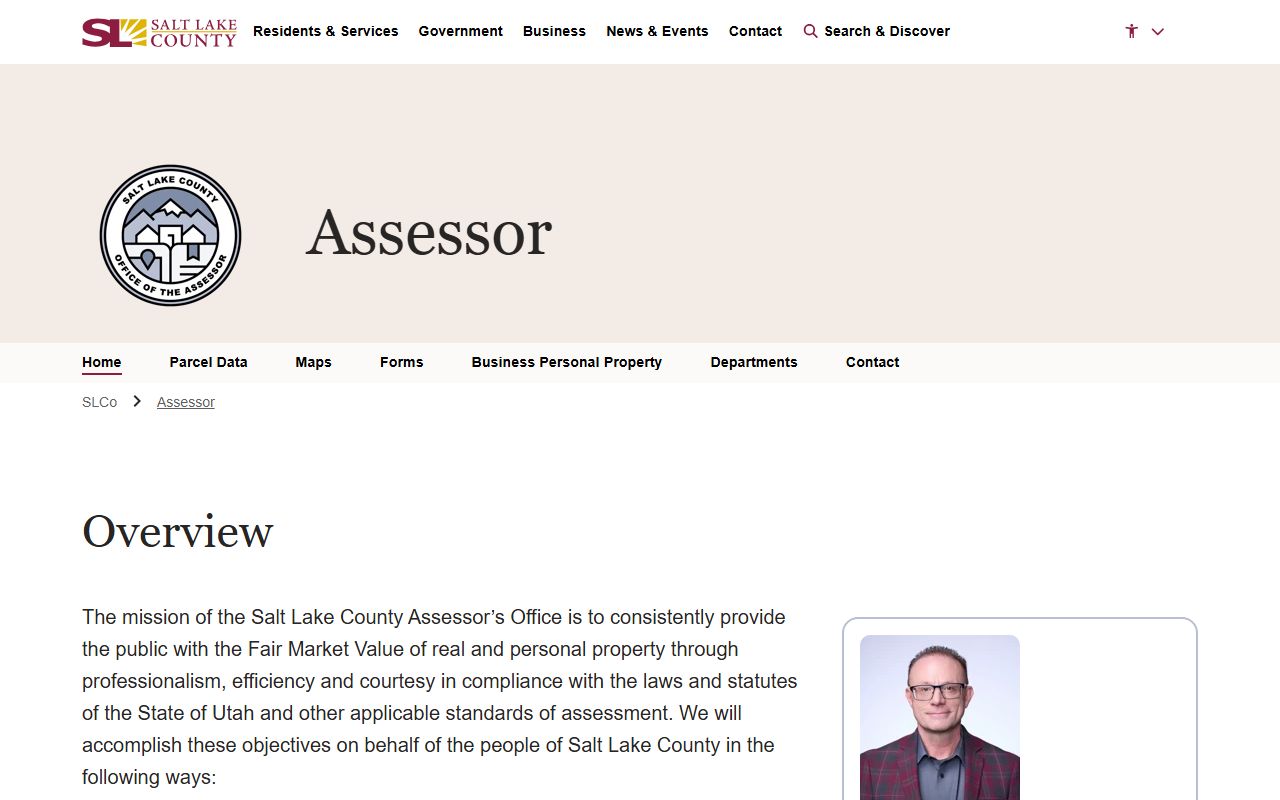
Property records from the Salt Lake County Assessor are publicly accessible and can help document historical ownership or address history when filing an unclaimed money claim.
Recorder and Auditor Resources
The Salt Lake County Recorder maintains official documents for all real property in the county, including deeds, liens, and recorded instruments. If your unclaimed property is tied to real estate activity, an old property sale, or a title company that held funds in escrow, the Recorder's records are a useful research tool. The office also provides public access to its archives at archives.slco.org, which houses historical county documents dating back many years.
The Salt Lake County Auditor, reachable at (385) 468-7200, determines property tax rates for the county and sends out Notices of Valuation every July. The Auditor also administers the county's Tax Sale auction for properties with five-year delinquent tax balances. If you are searching for unclaimed property tied to a past real estate transaction in Salt Lake County, the Auditor's records can help establish the timeline of ownership and any financial obligations attached to a parcel.
The Salt Lake County Recorder holds official real property records for the county and provides public access to historical documents through its online archives portal.
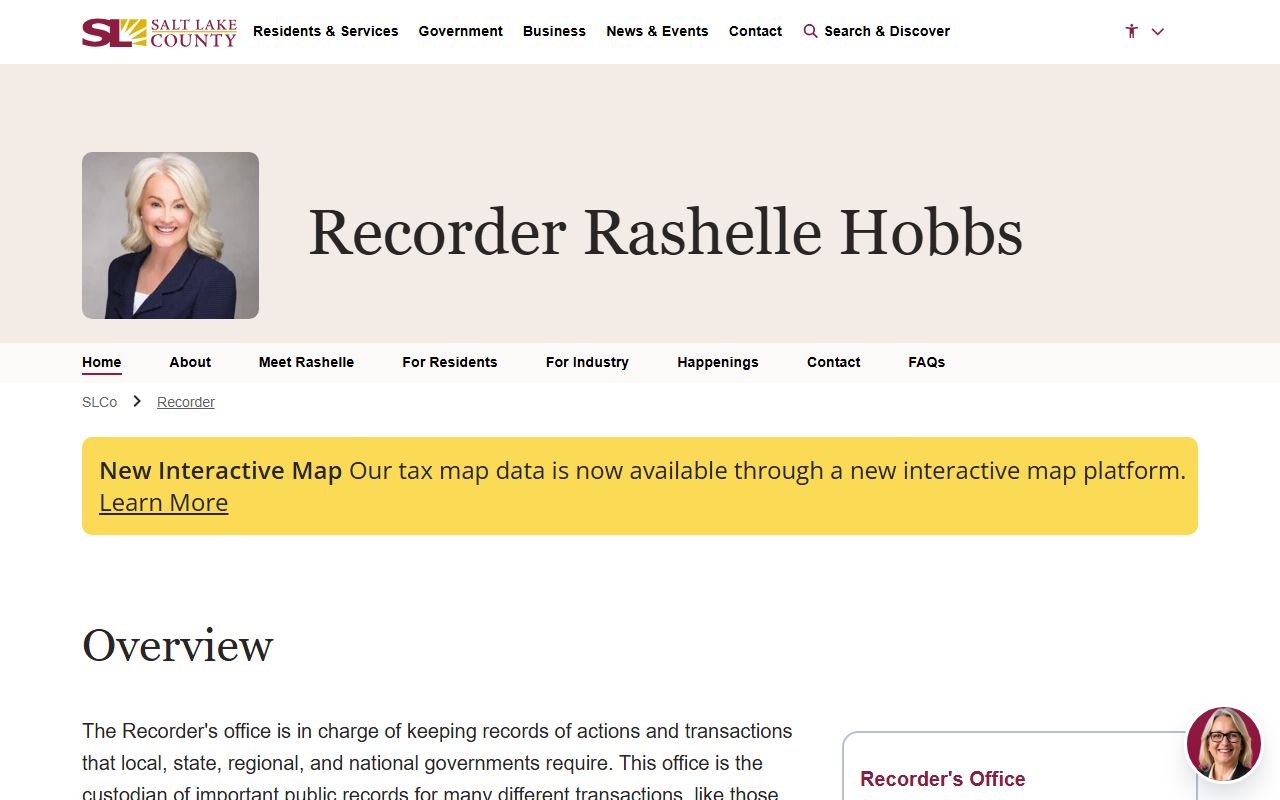
Documents held by the Salt Lake County Recorder are public record and can be accessed online or in person at 2001 S State St, Suite N1-600 in Salt Lake City.
Types of Unclaimed Property in Salt Lake County
Salt Lake County's large and diverse economy produces a wide range of unclaimed property types. Major hospitals and medical systems generate uncollected patient refunds, insurance overpayments, and billing credits that are returned to patients but go uncashed. Technology companies and startups produce stock option payments, equity distributions, and final paychecks that sometimes never reach former employees who moved out of state. Airlines and transportation employers have unclaimed wage payments tied to a mobile workforce that changes addresses frequently.
Financial institutions with headquarters or major branches in Salt Lake County hold significant volumes of dormant accounts, uncashed cashier's checks, and matured certificates of deposit. Insurance companies with offices here hold uncollected life insurance proceeds from policies where the insurer lost touch with beneficiaries after a policyholder's death. Utility deposits from the many apartment complexes and rental properties across the county go uncollected when tenants move without leaving a forwarding address.
Immigrant communities and non-English speaking residents are statistically more likely to have unclaimed property because language barriers can make the claim process harder to navigate, and because they may not know the state program exists. The Utah State Treasurer's portal at mycash.utah.gov is available to anyone regardless of immigration status, and the claim process is straightforward. Common types of unclaimed property in Salt Lake County include:
- Dormant savings and checking accounts at local banks and credit unions
- Uncashed payroll, pension, and final wage checks
- Life insurance proceeds not collected after a death
- Utility and rental security deposits
- Stock dividends, brokerage balances, and equity distributions
- Medical billing refunds and insurance overpayment credits
- Safe deposit box contents
MissingMoney.com for Salt Lake County Searches
MissingMoney.com is a free multi-state search tool endorsed by the National Association of Unclaimed Property Administrators (NAUPA). It is a useful supplement for Salt Lake County residents, especially those who have lived in other states. Many people in Salt Lake County relocated from California, Nevada, Colorado, Arizona, or other western states, and may have unclaimed property in those states as well. MissingMoney.com lets you run one search and check multiple state databases at once.
For Utah-specific property, mycash.utah.gov is always the most complete source. When you find a Utah match on MissingMoney.com, it links to mycash.utah.gov for filing. For businesses researching their own reporting obligations, the NAUPA Utah page has information on reporting requirements and deadlines under Utah law.
How to Claim Salt Lake County Unclaimed Property
The process starts at mycash.utah.gov. Search your name or a deceased relative's name. If a record appears, click through to start the claim. The state will ask for identity verification and documentation linking you to the specific property listed.
For personal claims, a government-issued photo ID is the standard requirement. You will also need details that match the property record, such as a past address, account number, or employer name. For claims on behalf of a deceased person's estate, you need the death certificate and evidence of your authority to act for the estate. That could be letters testamentary from a probate court, a small estate affidavit, or another legal document depending on the estate's size and whether formal probate was opened. The claim portal at mycash.utah.gov shows what documents are needed for each claim type.
There is no deadline to file. Utah Code Section 67-4a-501 under Utah Code Title 67, Chapter 4a preserves the right to claim at any time. Approved claims are paid by check or direct deposit. Most claims are processed in a few weeks to a couple of months. Complex claims or those requiring additional documentation may take longer. Filing is free, and you do not need a lawyer or paid claims service. The Utah State Treasurer can be reached at (801) 715-3300 or by mail at P.O. Box 140530, Salt Lake City, UT 84114-0530.
The Salt Lake County Auditor determines property tax rates and maintains records that can help trace the history of real estate transactions connected to unclaimed property claims.
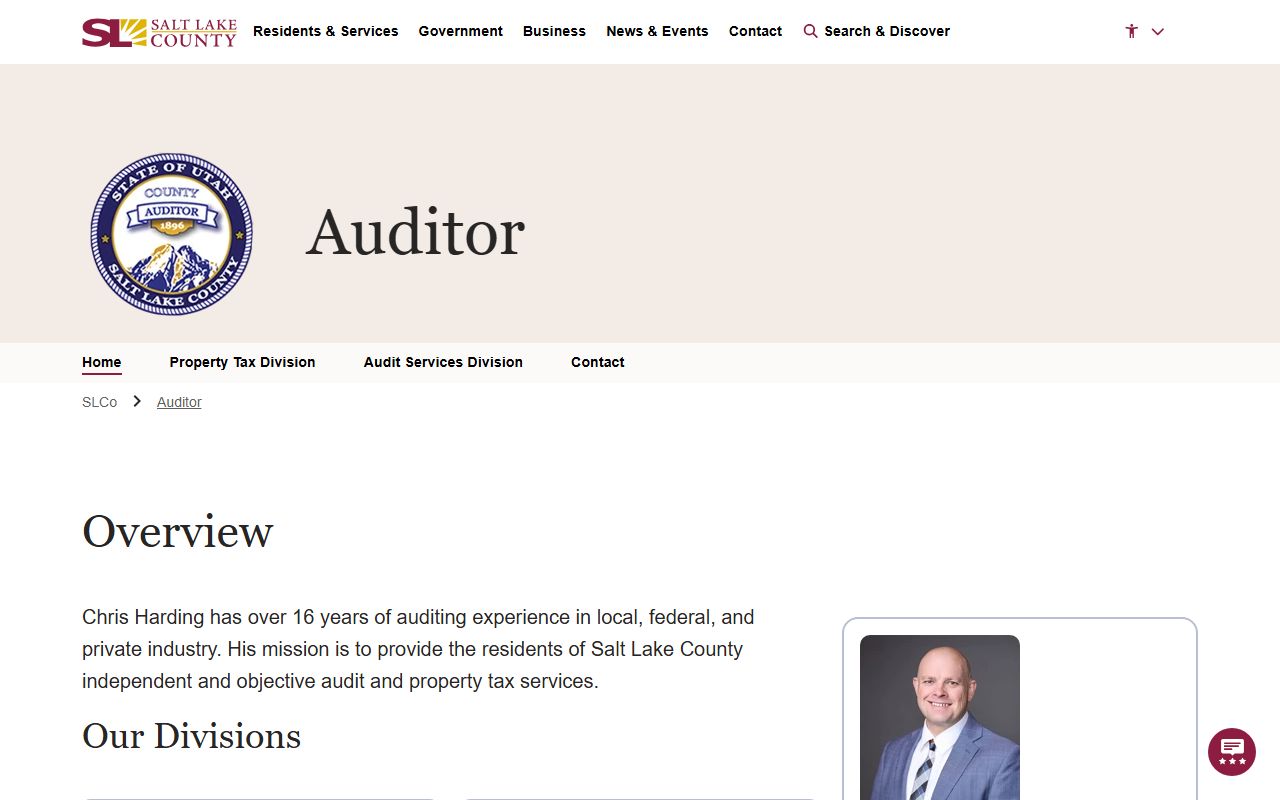
The Salt Lake County Auditor's records, accessible at (385) 468-7200, can provide documentation of historical tax payments and property activity that may support a claim.
Utah Unclaimed Property Law
Utah's unclaimed property program runs under the Utah Revised Uniform Unclaimed Property Act, codified at Utah Code Title 67, Chapter 4a. The law sets the dormancy periods that determine when property must transfer to the state. Most bank accounts go dormant after three years of no owner-initiated activity. Wages and utility deposits move to the state after one year. Money orders have a seven-year dormancy period, and traveler's checks go to the state after fifteen years of inactivity.
Holders, meaning banks, insurers, employers, and other businesses, must report and remit dormant property to the Utah State Treasurer by November 1 each year. After the state takes custody, the property is listed in the public database. The state cannot permanently keep the money. Utah Code Section 67-4a-501 guarantees that the rightful owner or their heirs can file a claim at any time. Since 1984, the program has returned over $131 million to Utahns. In fiscal year 2022 alone, $30.6 million was returned to claimants across Utah, with Salt Lake County accounting for a significant share of both submissions and payouts.
Cities in Salt Lake County
Salt Lake County contains thirteen cities that meet the population threshold for individual pages on this site. Each city page has local resources, court and office contacts, and additional information specific to that community. If you live in or have ties to any of these cities, check both the city page and the state portal at mycash.utah.gov.
Cities in Salt Lake County with individual pages include Salt Lake City, West Valley City, West Jordan, Sandy, South Jordan, Taylorsville, Herriman, Draper, Murray, Riverton, Cottonwood Heights, Midvale, and South Salt Lake. Smaller communities in Salt Lake County, including Holladay, Millcreek, Bluffdale, and others that do not meet the population threshold, do not have individual pages here, but residents of those areas should still use mycash.utah.gov to search.
Nearby Counties
Salt Lake County borders three other counties, each with its own page on this site. If you have also worked or lived in a neighboring county, check those pages for additional resources. Nearby counties include Davis County to the north, Utah County to the south, and Tooele County to the west. All Utah unclaimed property is searchable through one database at mycash.utah.gov, but county-level office contacts can help when you need supporting documents for your claim.